
How Toronto Stole the Show and Possibly Changed the Game
Minnesota led Game 6 of the World Series 4-0 after four innings, and the Toronto Blue Jays did something they had managed just 13 times in 90 regular-season games.
They hit two home runs.
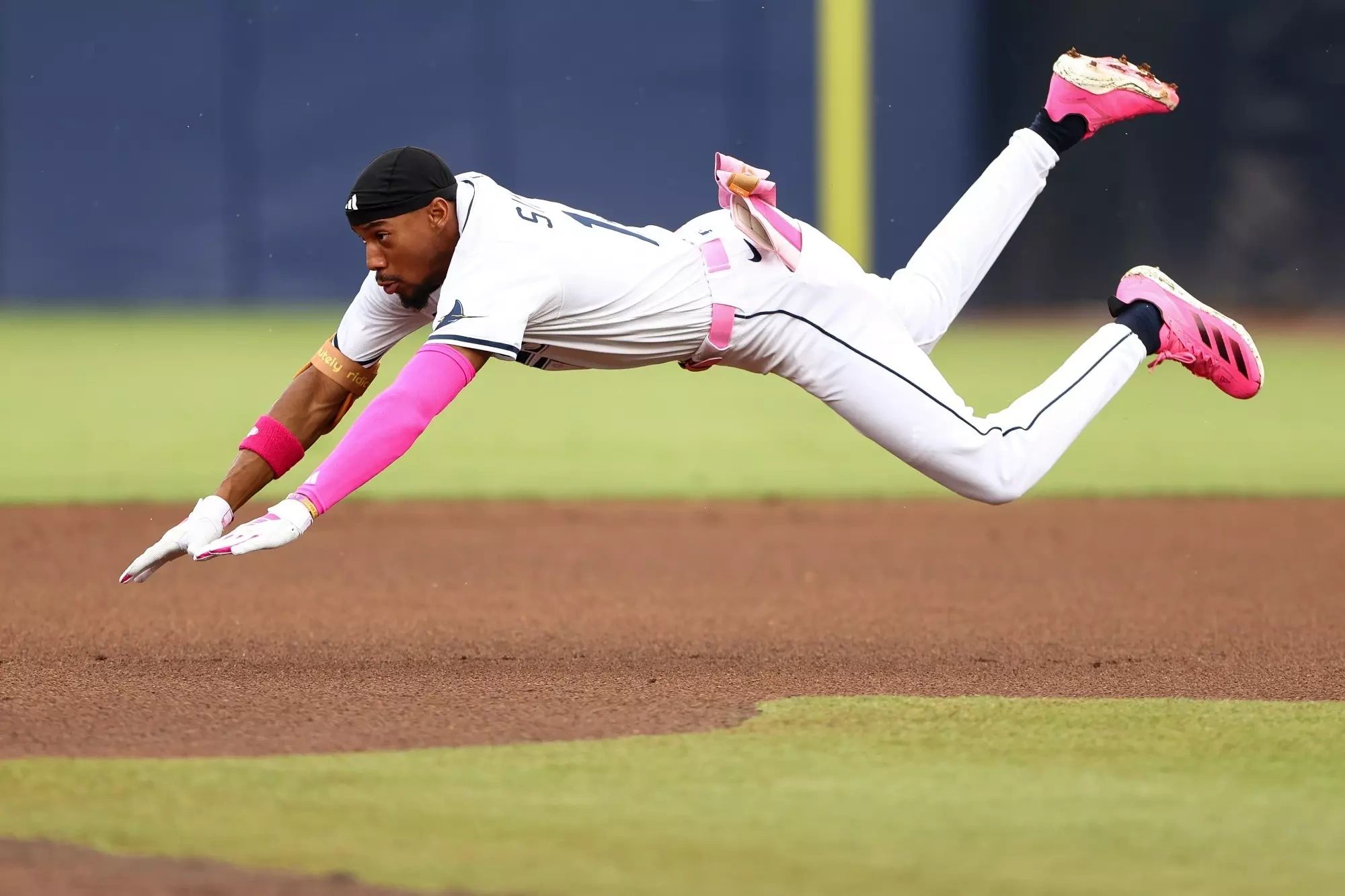
Willson Contreras took Trevor Megill over the wall with a man on in the 5th. An inning later, with two outs and nobody aboard, Giancarlo Stanton put one into the night off Emilio Pagán. Ernie Clement drove in another with two outs, Jacob Young laid down a sacrifice and knocked in a run of his own, and by the time Josh Hader recorded the last out of the MMDBL's 8th season, Toronto had scored six unanswered and won 6-4.
A team that hit 75 home runs in 90 games won the clincher on the back of two big flies. There is something perfect about that, and something slightly unfair, when you consider who the 2026 Blue Jays were and how they got to that critical moment in Game 6 of the MMDBL’s 8th World Series.
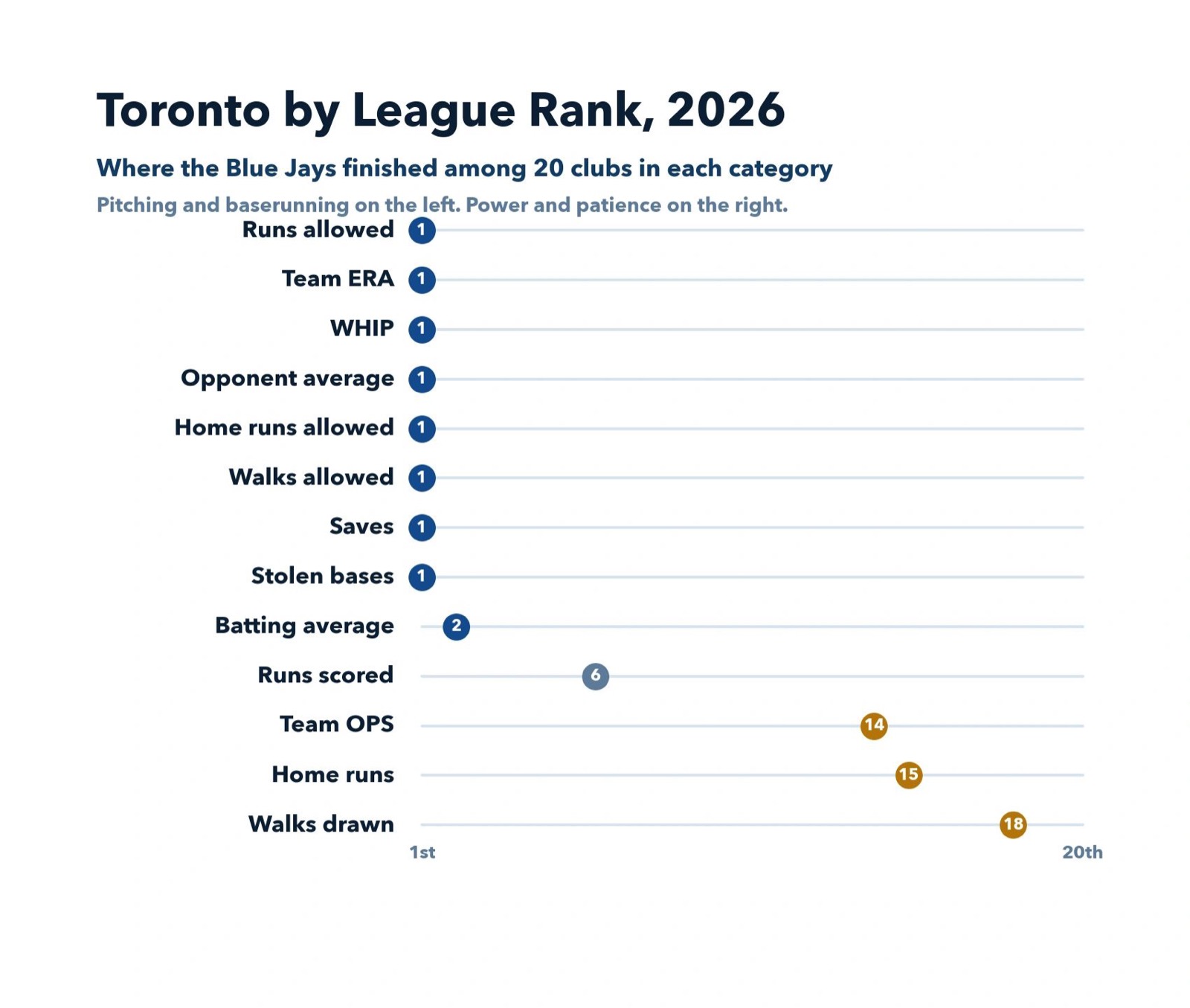
Toronto finished 15th of 20 in home runs, 14th in OPS, and 18th in walks. Handed that offensive profile in March with no team name attached, most managers would have penciled in a 50-loss season.
Now the other side of the ledger. The Blue Jays led the MMDBL in earned run average (3.28), WHIP (1.10), opponent batting average (.223), fewest runs allowed (326), fewest home runs allowed (74), fewest walks allowed (215) and saves (34). Seven league-leading pitching categories – no other club had more than two.
Then they led the league in stolen bases (151), and — because the two travel together — in caught stealing (49) as well.
Seven pitching titles, the running game, and 75 home runs. That is the entire formula, and it was worth 60 wins during a historic regular season.
If it sounds familiar, it should. It is the real-life MLB Milwaukee Brewers' blueprint transplanted into the MMDBL: don't let the other team score, put the ball in play, make somebody throw it, and take the extra base while they decide what to do about it. In Moneyball, John Henry told Billy Beane, "Anybody who's not building a team right and rebuilding it with your model, they're dinosaurs." The Moneyball context was centered on, well, money of course. The theme is the same, except with the MMDBL Jays, it is running, defense, pitching and more running. The model had been working and slowly building for several seasons. In 2026, it finally broke through. Will it change how other GMs build their teams?
How the Blue Jays score runs
This is the part worth slowing down for, because the notion that Toronto isn’t a “hitting team” is the easy story and it isn't quite true.
Toronto batted .261, second-best in the MMDBL, against a league average of .249. What the Blue Jays did not do was walk — 264 free passes, 18th in the 20-team MMDBL — and they did not slug, finishing at .390 against a league mark of .403. Add it up and their on-base percentage (OBP) was .326, almost exactly the league average of .324, and 10th out of 20. Dead average at reaching base, achieved entirely through base hits rather than patience or power.
The difference is what happened next. A league-average OBP built on singles, with the two best base stealers in the league running behind it, is not the same asset as a league-average OBP built on walks. Toronto turned singles into doubles, or even triples, on the basepaths and then needed only a ground ball or flyball to score time and again.
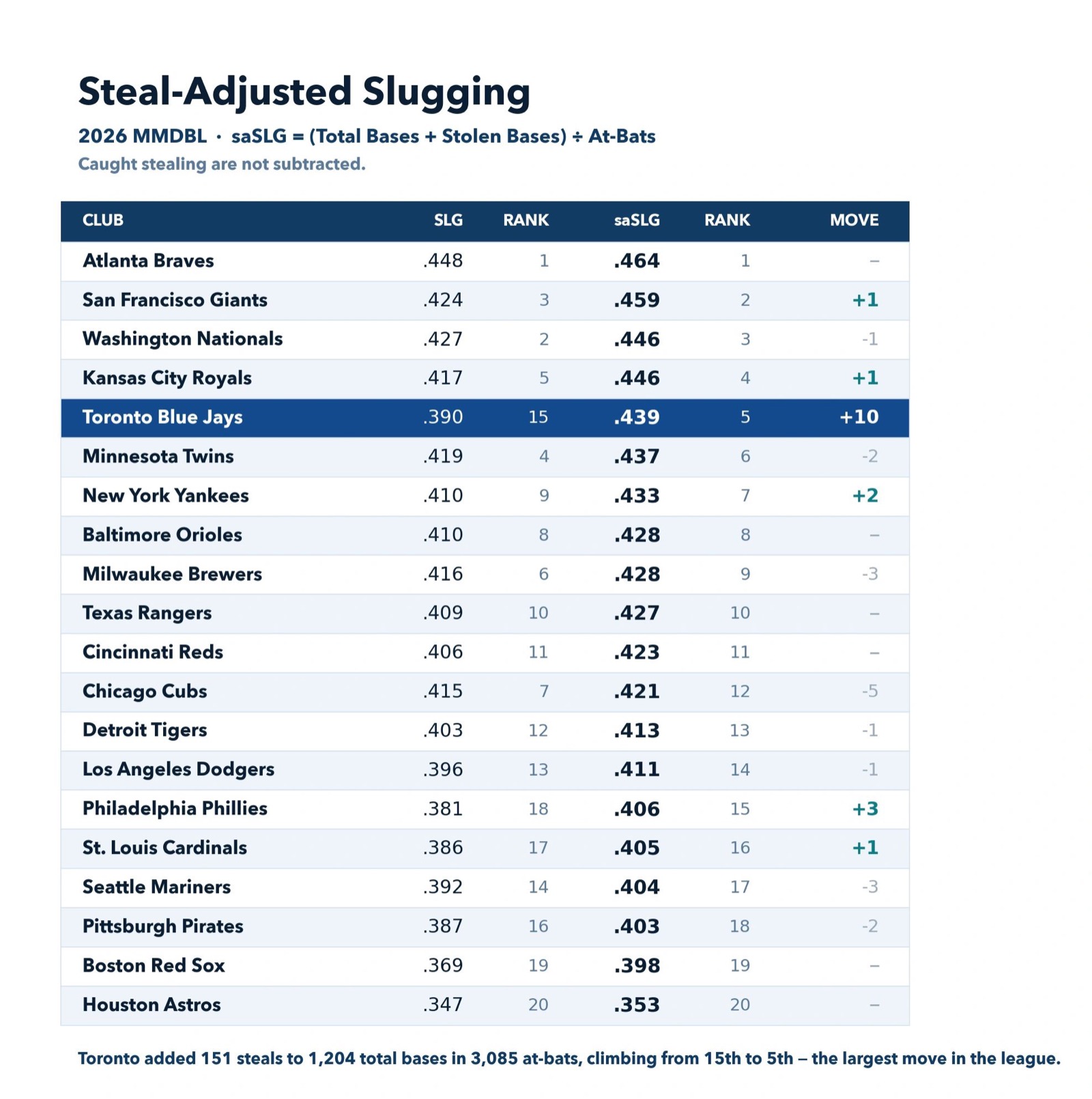
There is a tidier way to see it. Slugging percentage counts the bases a hitter takes with the bat and ignores the ones he takes with his legs. Add each club's stolen bases to its total bases — steal-adjusted slugging (saSLG), or (TB + SB) ÷ AB — and the 2026 standings rearrange themselves around Toronto. The Blue Jays put 1,204 total bases and 151 steals into 3,085 at-bats, which moves them from .390 and 15th in slugging to .439 and 5th in the saSLG category, the largest climb in the league by a distance; the next-biggest mover gains three places.
Widen it to all 160 team-seasons the MMDBL has played in its 8 years of existence, and the 2026 Blue Jays own the record. Measured against every club in league history, Toronto's slugging ranks 121st — and its steal-adjusted slugging ranks 66th. That climb of 55 places is the largest any team has ever managed. Second place is the 2025 Blue Jays, who moved up 52. The same franchise holds both, which is less a curiosity than a statement of intent.
It is not an official statistic (though this is tracked in the MMDBL record book). It is simply a way of counting the bases Toronto actually took.
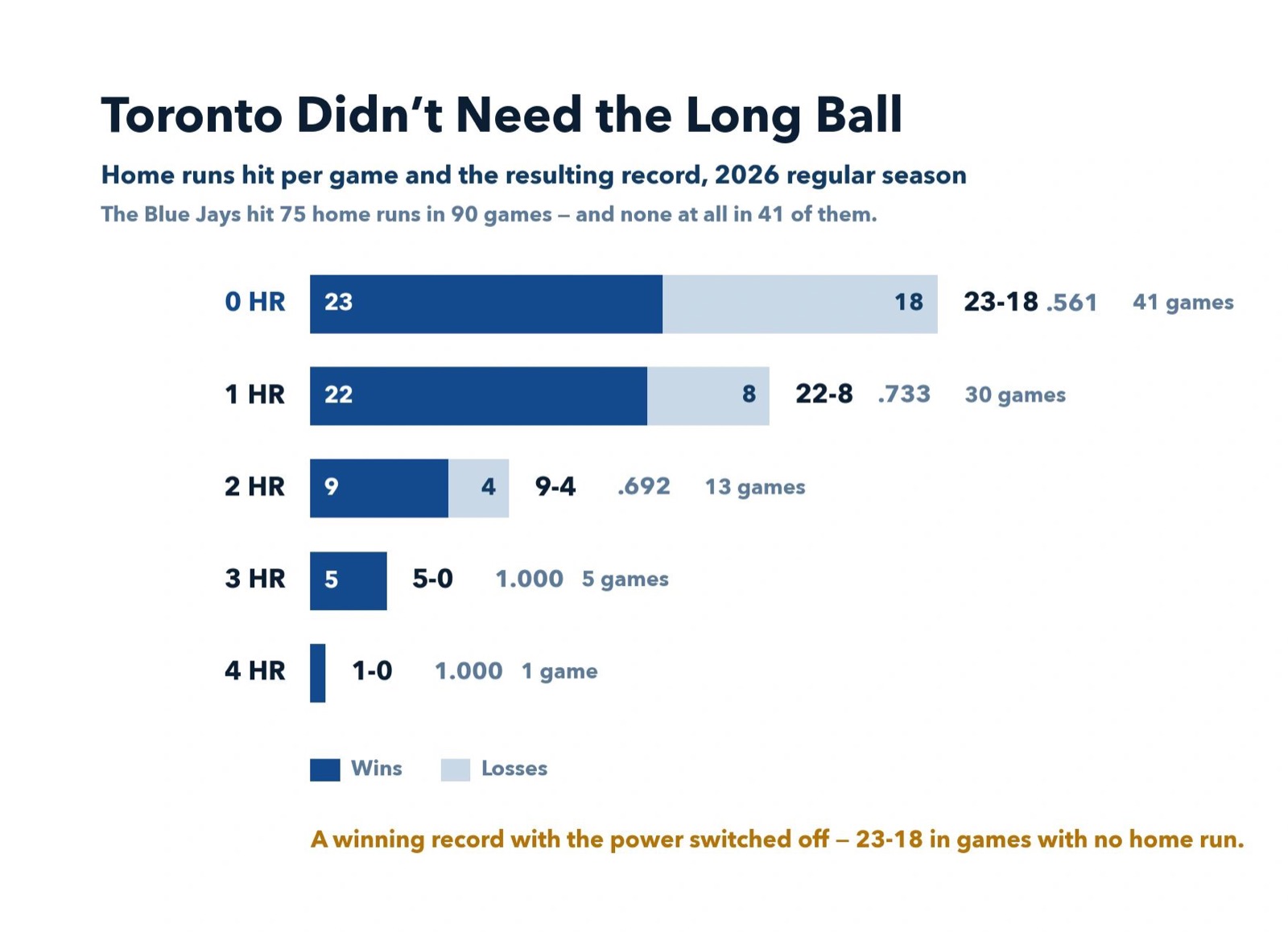
As for the 75 home runs — they were scarce, but they were not decorative. Toronto failed to hit a home run at all in 41 of its 90 games and went 23-18 in them. A winning record in games where the club's power output was zero is the single clearest statement of what this team was. When the Jays did connect they were close to unbeatable: 22-8 in one-homer games and 15-4 when they hit two or more, for a combined 37-12.
It would be tidy to report that the few home runs Toronto did hit arrived at unusually important moments. They did not. Of the Blue Jays' 75, 26 put the club ahead and 6 tied the game — 32 of 75, or 42.7%. Across all 1,878 home runs hit in the MMDBL in 2026, the league figure was 39.2%, and Toronto ranked 8th of 20. The Dodgers were the genuinely clutch power team at 54%. The Blue Jays were ordinary.
Which is rather the point. Toronto's home runs were neither plentiful nor especially well timed, and the championship was not built on them; but in the decisive Game 6 it was a pair of well-timed blasts that set the wheels in motion to deliver Toronto its first championship. The club spent 90 games demonstrating it could win without them, or just one of them, yet they got two – as if Stanton’s final homer of the 2026 season was a karmic explanation point.
Only one club hit better than Toronto all season. San Francisco batted .273, the best mark in the MMDBL, and paired it with the league's best run differential at +133. On paper the Giants were the better offensive team and the better team outright.
Then October arrived, when scoring gets harder for everybody. Across the 2026 playoffs the 12 qualifying clubs hit a collective .238 — 12 points below the regular-season league mark, with the collective OPS falling 37 points. Toronto went the other way. The Blue Jays batted .268 in the postseason, the best average in the field, better than their own regular season, while the teams around them went cold.
San Francisco hit .184 and went home in the League Divisional Series (LDS). The league's best-hitting team lost 89 points off its average when the games mattered most; the second-best gained 8 points when it mattered most.
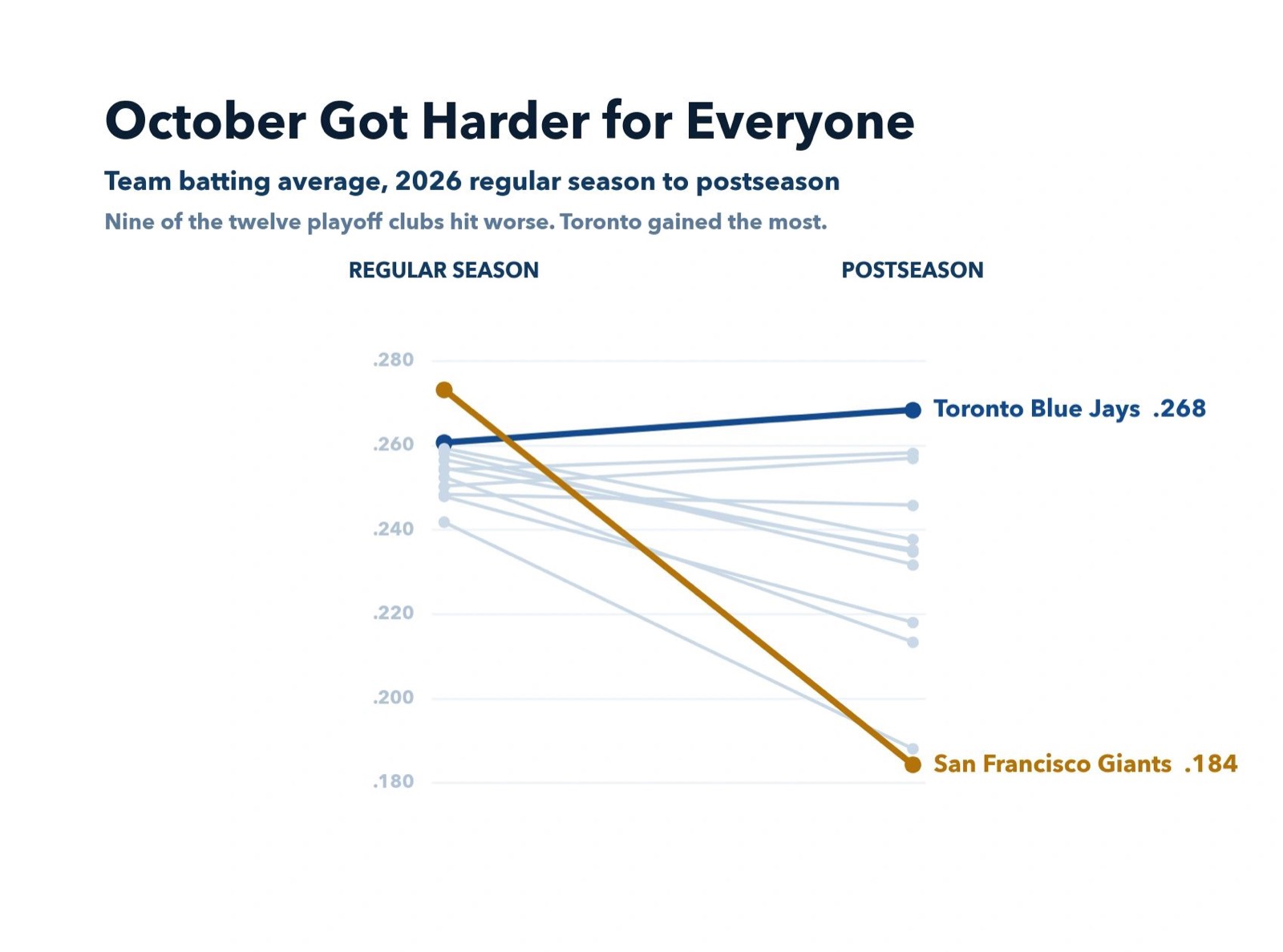
Toronto did not out-slug anybody in October either — a .360 postseason slugging percentage, below the field's .380. They simply kept hitting singles when nobody else could hit anything. And they kept running.
60 wins, and three entries in the record book
Toronto finished 60-30, joining Detroit (2023) and Texas (2024) in the MMDBL's 60-win club. Here is the part that matters: neither of those teams won the World Series. Sixty wins had been, until now, a very nice way to lose in October.
The Blue Jays did not coast into it. They went 28-12 over the final 40 games, the best close in the league, and the Bull Durham's top seed was not settled until the final afternoon — Toronto winning 3-2 at St. Louis while San Francisco lost in a sweep to Texas, flipping a bye the Giants had held since mid-August. Toronto went 34-11 on the road, which makes home-field advantage look like a courtesy rather than a necessity.
Three Blue Jays marks now sit atop the all-time MMDBL record book:
· 60 wins in a season, tied with the 2023 Tigers and 2024 Rangers
· 49 caught stealing, a record, and the inevitable cost of 190 attempts
· 34 saves, a record, and the signature of a club that was forever protecting a one-run lead
They were also 2nd all-time in team WHIP (1.10), 2nd in fewest walks allowed (215), and 3rd in stolen bases (151). Their 12 postseason wins tie for 4th in league history.
Some individual performances are worth noting. Chandler Simpson played 80 games, batted .294, slugged .350 and hit zero home runs. He stole 49 bases and led the MMDBL. Nico Hoerner hit .314 with 39 steals, second in the league. Toronto employed the two best base stealers in baseball and got five home runs out of the pair of them. José Caballero added 24 steals while batting just .215. Three players accounted for 112 steals, or 75% of the team’s 151 total. Simpson, Hoerner and Caballero alone out-stole 18 teams during the 2026 season.
The thunder, all of it, came from Stanton: 31 home runs, a .603 slugging percentage, and 71 RBI. Stanton hit 41% of his team's home runs by himself. Remove him and the 2026 Blue Jays hit 44 home runs in 90 games.
The ace they lost, and the ace they found
Zack Wheeler made 10 starts in a 90-game season. When he pitched he was the best arm in the league — 7-1, a 2.60 ERA, 99 strikeouts in 69 1/3 innings, and a 0.76 WHIP nobody else approached. When he didn't, which was most of the year, Toronto won anyway. This was seemingly against all odds because, mathematically, the subtraction of Wheeler significantly impacted the output of the MMDBL’s Advanced Analytics Department (MAAD) Expected Wins (ExW) model. The model favored the Giants all season, including after the trade deadline, and without Wheeler the modeled gap between the two teams grew.
The model be damned! In Wheeler’s absence, others stepped up. Cristopher Sánchez carried the rotation at 15-4 with a 2.22 ERA, 4th among qualifiers, and 160 strikeouts in 158 1/3 innings. Eric Lauer was the luxury item — 11-1 with a 1.36 ERA across 15 starts, a figure that would have led the league by half a run had he thrown enough innings to qualify. Aaron Civale took the ball 13 times, went 1-4 with a 5.27 ERA, and will matter later, because this story has a sense of humor.
In midseason Toronto acquired Nathan Eovaldi from Cincinnati, where he had been 6-2 with a 3.02 ERA. He made six unremarkable starts down the stretch — 1-2, 3.69. A fifth starter. Insurance. Then Game 2 of the LDS happened.
68 days
Milwaukee took Game 1 of the LDS at the Rogers Centre, 4-3, with Paul Skenes going 7 innings and allowing a single run. In Game 2, Wheeler faced 7 batters, served up a 3-run homer to Nathaniel Lowe with two outs in the first, and left the game injured. The diagnosis: out for 68 days. The season only had 28 left in it.
Toronto won Game 2 9-3 regardless. Lauer took the win in relief. It was the loudest offensive performance of the Blue Jays' postseason, and it arrived on the afternoon they lost their best pitcher.
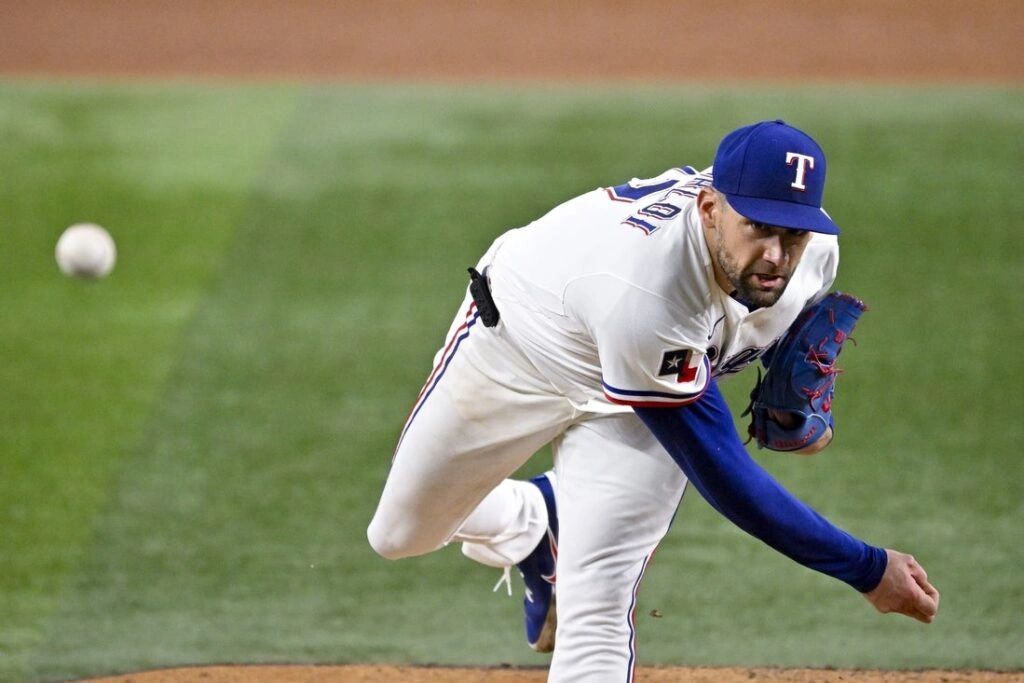
Milwaukee won Game 3, 2-0, and Toronto sat a pair of games from elimination at 1-2 with no Wheeler. The Blue Jays then won 3 straight — 4-1, 5-3, and a 1-0 walk-off in Game 6 that may be the most Toronto game ever played. The Jays managed 7 hits and no runs through 8 innings. Milwaukee went 0-for-6 with runners in scoring position and stranded 8. In the bottom of the 9th, Chandler Simpson, the man with no home runs, drove in the only run of the game.
Against Texas in the LCS, the same script: 6 games, clinched 2-1 on RBIs from Dominic Canzone and Caballero and a sacrifice from Young. One run was the Game 6 margin once again.
Eovaldi opened the World Series by one-hitting the Minnesota Twins, 5-0. Toronto scored 4 in the first inning and then declined to let anyone else have anything. Game 2 went to Toronto 3-2. Game 3 to Minnesota 8-6. Game 4 to Toronto 4-2. Game 5 to Minnesota 5-1. And then came Game 6, the 4-0 hole, and the two home runs. The winning pitcher in the championship-clinching game was Civale, the man who went 1-4 with a 5.27 ERA in the regular season. Of course it was.
Across 18 postseason games the Blue Jays hit 9 home runs, batted .268, stole 26 bases — 11 more than any other playoff club. All of the Jays’ series went 6 games, and the only time Toronto trailed in an October series was when the Brewers had a 2-1 lead in the LDS and the Jays were still reeling from the untimely loss of Wheeler.
The running game in October
Toronto stole 26 bases in 18 postseason games, 11 more than any other club in the field; Minnesota was next with 15. They were caught 6 times and picked off once — a 79% success rate against the best pitching and catching the league had left to offer.
Hoerner had 9, Simpson 8, Caballero 7 and CJ Abrams 2. Five of the 26 were steals of third or home, which is the part that separates a running team from a team that runs.
The obvious question is whether any of it mattered. It did, and not subtly. Fourteen of the 26 steals — 54% — were followed by a Toronto run later in that same half-inning. Better still, look at it by inning: Toronto batted 157 half-innings in the postseason and scored in 38 of them, a score rate of 24%. In the 21 innings where a Blue Jay stole a base, Toronto scored 14 times — a score rate of 67%. In the 136 innings where nobody ran, they scored 18% of the time.
Simple math: In innings in which Toronto stole a base they were 372% more likely to score than in innings when they didn’t! A club that scored in roughly one inning in five scored in two of every three innings it stole a base. For a team with nine postseason home runs, that is not a tactic. That is the offense.
For all that, the 26 steals are not a league record. They rank 3rd in MMDBL postseason history — and the record, 36, belongs to the 2023 Chicago White Sox. Which is to say it belongs to this same franchise, three years and one city earlier.
Playoff MVP
Canzone hit .440. Clement collected 19 hits and batted .339. Hoerner and Simpson combined for 17 steals. These are all reasonable cases for the playoff’s Most Valuable Player (MVP) award.
But a club that loses the best pitcher in the league in the second game of its postseason and wins the World Series anyway should probably hand the trophy to the man who replaced him. Nathan Eovaldi went 4-1 in six starts with a 1.96 ERA and a 0.65 WHIP across 36 2/3 October innings. He out-pitched Skenes, he out-pitched Texas, and he one-hit the Twins in the game that set the tone for the World Series.
Toronto acquired him as a 3rd or 4th starter and he pitched like one most of the regular season. In the playoffs, however, we was the undisputed ace and the biggest reason Toronto is having a championship parade.
The Phillies did it first
Blue Jays fans looking for precedent need only go back three seasons, to a Philadelphia club that won the 2023 title while looking even less like a team with championship pedigree.
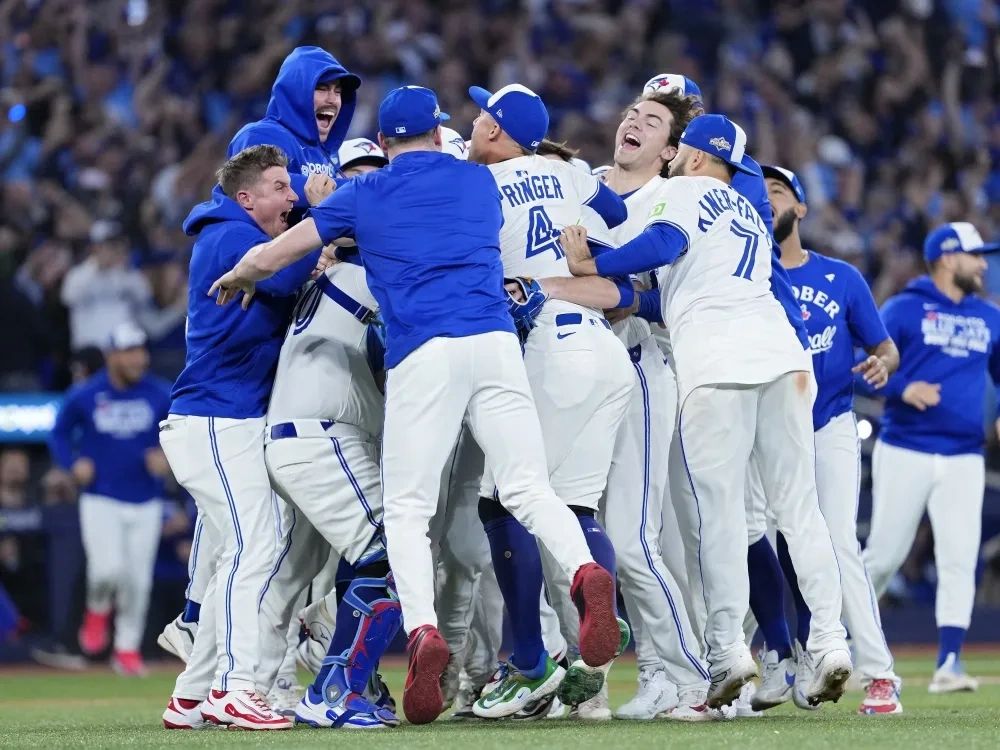
Those Phillies batted .239 — 16th of 20 — with a .310 on-base percentage (12th), 87 home runs (9th) and 383 runs (11th). They were a bottom-half offense in nearly every category. What they did have was the league's best defense, the 2nd-fewest runs allowed (292), a 3.20 ERA, and 116 stolen bases, most in the MMDBL that year. They famously used their two best starters as Openers, ran their bullpen for more innings than their rotation, and allowed 7 unearned runs all season — a quarter of the league average. They won a 7-game World Series over the Chicago White Sox.
Set the two champions side by side and the resemblance is hard to miss: a bottom-half offense, a league-leading running game, elite run prevention, and a willingness to win 2-1 as many times as necessary.
Two of the last four MMDBL champions have been built this way. That is no longer an anomaly; it is a pattern, and it is one every club in the MMDBL should be weighing over the Winter months and during January’s Rookie & Free Agent Draft.
This was not the franchise's first World Series. It was there in 2023, under the Chicago White Sox banner, and that one did not end with a dogpile. Those White Sox won 54 games, finished 2nd in the Natural, and went 15-10 through a brutal postseason — still the 2nd-most postseason wins in a single October in league history — before running into the Phillies. The series went 7 games. Chicago held a 5-0 lead into the 9th inning of Game 6 and watched Philadelphia claw back to 5-4 before holding on. In Game 7, a Stuart Fairchild home run in the 5th was the difference. The franchise had come within one game, and then one inning, and then one swing, of a title.
Between then and now came a 31-59 season. Then the move to Toronto, a 49-41 year and an LCS appearance in 2025, and now 60-30 and everything that followed. Two franchises, eight seasons, two pennants, one World Series trophy.
The Blue Jays didn't buy this one with home runs. They stole the show. Will there be a curtain call in 2027?