
National Story: What it Looks Like When a Plan Comes Together
A year ago at this time the Washington Nationals thought they might never win again. The club was mired in what became an MMDBL-record 16-game losing streak. In fact, the Nationals started the 2021 season 0-16 and finished with the MMDBL’s worst-ever winning percentage of .222.
What a difference a year makes.
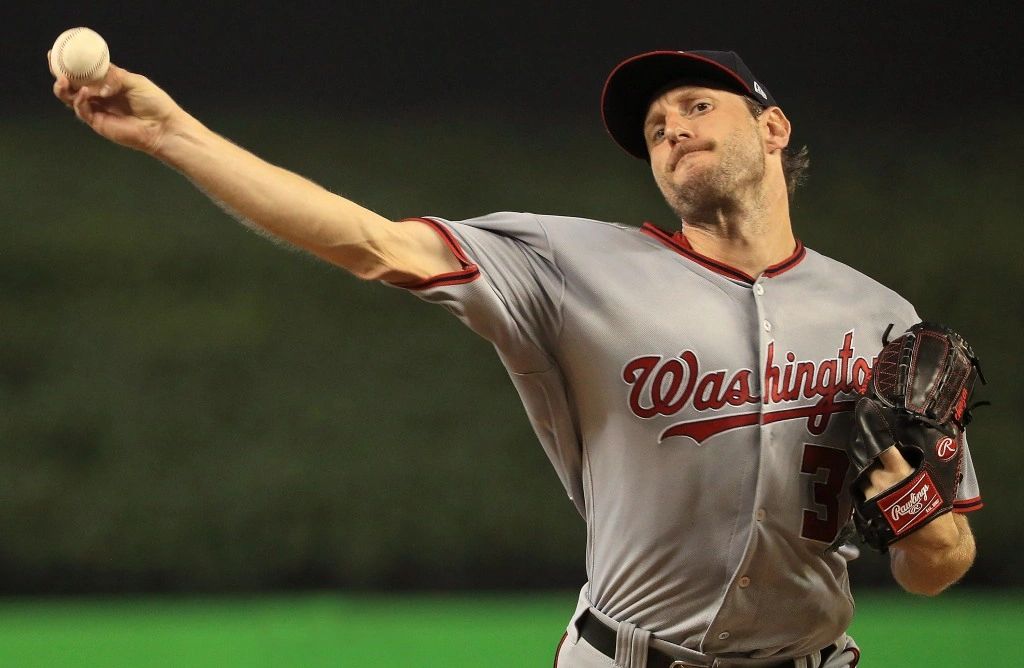
Through this season’s first 4 weeks, the Nats are 8-4 and sitting atop the Natural League’s Tommy Division. With the reigning champions Rangers, juggernaut Twins, the powerful Reds and the Braves, the Tommy Division is believed by many to be the best, most talented and deepest division in the MMDBL. Preseason prognosticators, in fact, put high odds on the MMDBL’s 2022 champ coming from the Tommy. But none of those prognosticators had Washington in mind.
You wouldn’t blame division rivals if they looked at their schedules, saw Washington, and started banking on 9-to-12 wins right there. And after watching the Nats get blanked by the Pirates and Jacob DeGrom on Opening Day, 5-0, some observers probably figured, “Here we go again.” Washington, however, battled for an extra-inning 3-2 win in Game 2, keyed by Abraham Toro’s go-ahead double in the top of the 15th. The win seemed cathartic, if not breakthrough. Instead of falling to 0-2 to start the season, the Nats’ win launched a 6-game winning streak that put the club at 6-1, best in the MMDBL through 7 games.
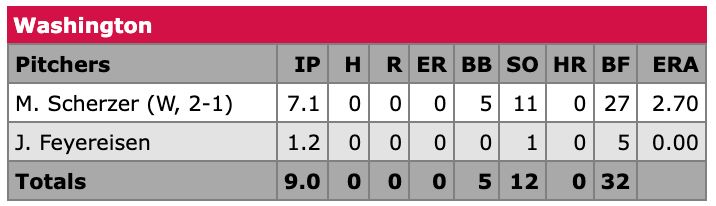
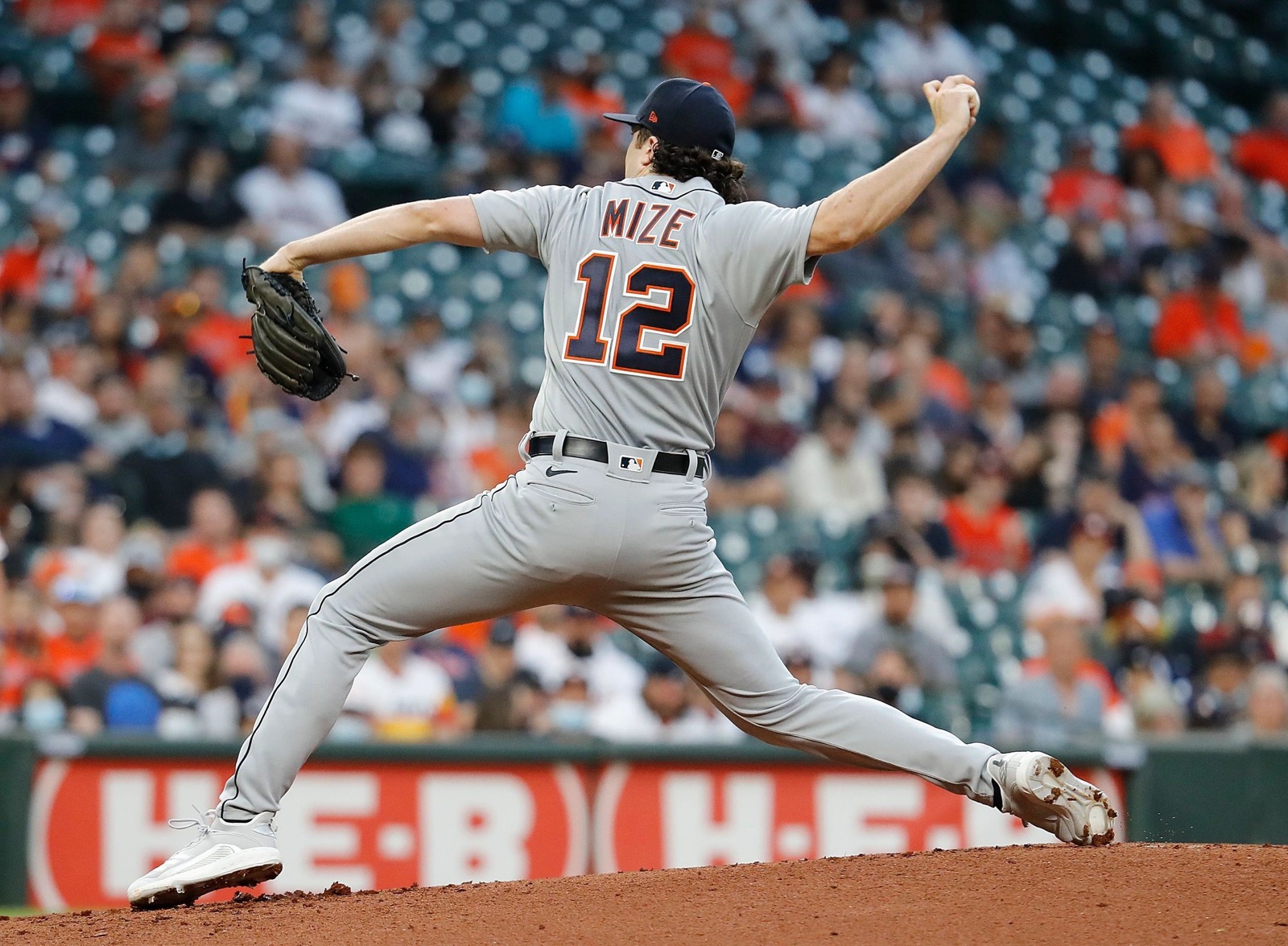
The streak started with the 15-inning win and became even more notorious by the end. Rookie Casey Mize took down the Dodgers with a masterful 2-hit, complete game shutout for Win No. 5. A day later, Max Scherzer and J.P.
Feyereisen combined for the MMDBL’s second-ever no-hitter in a 6-0 win over the Angels (see the first no-hitter here). Anaheim turned the tables and blanked the Nationals in the last 2 games of the series, ending Washington’s winning streak and flexing its own pitching muscle. In one of the shutout wins, the Angels’ Jose Berrios put up one of the best single-game lines ever in the MMDBL – 9 innings, 1 hit, 0 runs, 2 walks, 15 strikeouts – becoming only the 3rd pitcher in MMDBL history to ever toss a complete-game 1-hitter (Desclafani, Woodruff).
The Nationals rebounded in Week 4 with a 2-1 series win over Baltimore, which entered the series with a 6-3 record and was sitting atop the Natural League’s Whitey Division. In Game 1, Washington kept pulling rabbits out of its magical hat until finally pulling out a win. Trailing 4-3 entering the 9th, the Nationals small-balled their way to a 4-4 tie off Baltimore ace Corbin Burnes. Without getting a hit, Washington advanced pinch-runner Billy Hamilton to 2nd on a groundout. Hamilton then stole third before scoring the tying run on Nick Senzel’s groundout.
In the 15th, Washington grabbed a 5-4 lead on a Carter Kieboom RBI single, and then yielded the lead in the bottom of the frame to an Ozzie Albies 1-out solo shot. Finally, in the top of the 16th, the Nationals strung together run-scoring hits by Jazz Chisholm Jr., Daulton Varsho and Eloy Jimenez to take an 8-5 lead. This time the Orioles’ response fell short and the Nationals claimed an 8-6 win. After dropping Game No. 2, the Nationals won the swing game in explosive fashion, plating 14 runs on 17 hits, 7 walks and a hit batter for a total of 25 earned baserunners. It was the team’s biggest offensive output of the young season, but it showed that the Nationals are becoming a team that can beat you in many different ways – by tossing a no-no, or by unleashing an offensive explosion – as they now own the MMDBL’s best run differential (+22).
The team’s identity, however, is its pitching and youth. Washington has yielded the lowest opponent batting average (OBA) at .184 and the second lowest WHIP (1.01). The performance is steady throughout the rotation and bullpen. Mize is the face of the resurgence – young, talented and poised to get better. Kieboom, Jimenez, Chisolm, Varsho, Gleybar Torres and Lars Nootbar are all under 26 hitters who are just scratching the surface. The future looks bright in Washington, which is something few would have predicted a year ago when the club was setting futility records.
Where else is the future bright? Well, Milwaukee (5-1) is off to a fast start and is leading the Bull Durham League’s Sparky Division by 2.5 games as no other team in the division is above .500. Milwaukee is leading the way with offense. The Brewers are 1st in 3 of the 4 slashline categories batting .306/.370/.488/.858. They also trail only Toronto in slash with runners in scoring position (RISP), posting a .365/.410/.673/1.083 line.

St. Louis is once again off to a fast start, sitting atop the Bull Durham League’s Casey Division with a 7-2 record and a 2-game lead over Toronto. The Cardinals are doing it mostly with pitching, yielding the 2nd-best ERA in the league (2.75) despite ranking 13th in WHIP (1.40). Robbie Ray is making a strong opening argument in the case for the Cy Young Award. Ray is 3-0 with a pair of complete games and a .191 OBA, 1.18 WHIP and a 1.46 ERA.
Toronto (5-4) may trail the Cardinals by 2 games in the Casey Division, but they are averaging a league-dominating 6.78 runs scored and 2 homers per game. Toronto has massive firepower and is smartly protecting Mike Trout by DH’ing him, greatly reducing his chance of injury. The Blue Jays’ slashline is imposing -- .262/.348/.480/.828 – and the team’s OPS is 2nd only to Milwaukee. Toronto is the unequivocal leader in timely hitting, boasting a gaudy RISP slash of .391/.427/.826/1.253 on 74 plate appearances.
Run differential can be a misleading stat, especially early in the season, but it bears noting that Toronto’s +21 is best in the Bull Durham League by a factor of 3 (Cubs are +7 and Brewers are +6) and second-best in the MMDBL behind Washington. In the Natural League, Baltimore (+14) is 2nd to Washington in run differential, and Cincinnati (+3) is the only other team with a positive differential.
If there’s a common theme emerging early in the season it is – well – that it’s early. You can never learn too much about a team in just 3 or 4 weeks, except in the case of the Nationals. This year’s Washington club is different – better – than last year’s club, and Washington is a franchise on the rise. That much is not debatable.