
Snipe Hunt: The Quest to Discover Draft Treasure Before Others
To snipe or be sniped?
In every MMDBL Rookie & Free Agent Draft, each teams' GM drafts a guy or two that makes other teams’ GMs cringe – not in an “oh that’s a bad pick” way, but in a “dammit, I was hoping he’d fall to me” way.
Every GM identifies a player and harbors that inner thought, “Am I the only one who’s in on that guy?” Only to find out moments later that, no, others saw what they saw and moved more quickly to make “that guy” their guy.
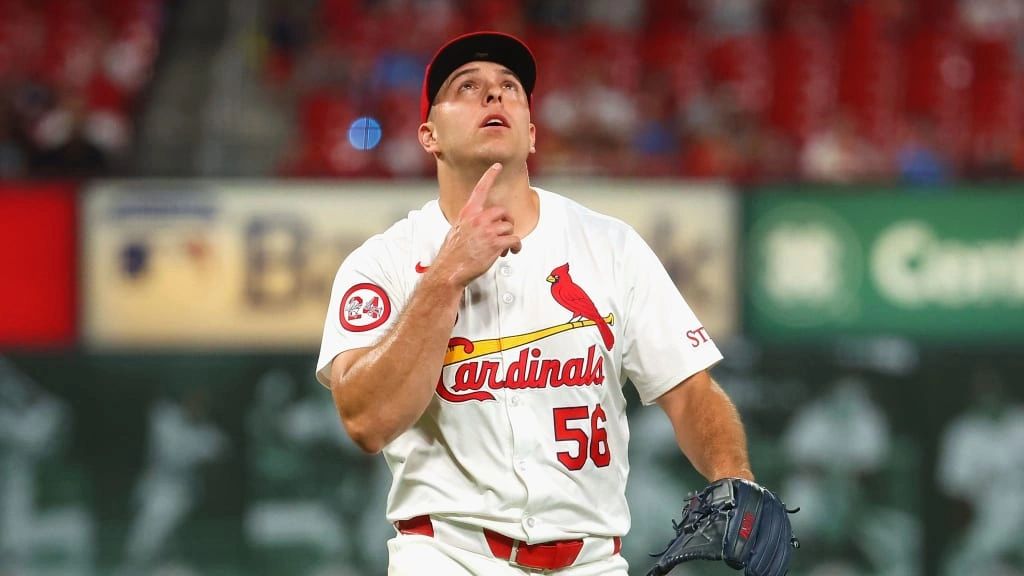
The GM that drafts “that guy” is the sniper; the GMs that didn’t, but wanted to, are the sniped. The usual “damn” or “darn” evoked by these draft picks is the highest form of flattery a GM can get – a draft pick so deft that it foils the hidden plans of his peers. In many aspects of life, they say imitation is the highest form of flattery. On draft day, eliciting a groan of frustration from another GM is, in fact, the highest form of flattery.
Team by team, below are some of the biggest snipes of the draft. The numbers in parentheses are the round and pick for each selection noted:
Atlanta – Daniel Palencia, P (2/34); Dalton Rushing, C (5/92)
The hard-throwing righty, Palencia, touts a decent card for this season and is ensconced as the MLB Cubs’ closer heading into Spring Training. Palencia is a classic 2-pitch closer with a fastball (70 on the 20-80 scale) and slider and he throws both pitches really hard. Marked as a guy with command concerns in the minors, Palencia’s command was better than advertised last year and this elevated his overall stuff grade. Though Rushing doesn’t have a clear path to significant playing time with the MLB Dodgers, he will back up Will Smith and is widely regarded as one of the game’s best 25-and-under catching prospects with a complete set of offensive and defensive tools. With drafting young catchers, it almost never makes sense to favor current opportunity over pure talent and tools. The cream of the crop always rises to the top when it comes to backstops.
Baltimore – Ryan Helsley, P (7/157); Zach Eflin, P (15/316)
The MMDBL Orioles like MLB Orioles. Helsley was one of the game’s most dominant closers from 2022 through 2024 – posting 5.8 WAR, notching 82 saves, and yielding an opponent batting average (OBA) under .200 with a WHIP around 1.00 – and he’ll look to bounce back from an injury-marred 2025 as the MLB Orioles’ closer this season. Same story for Eflin, who will look to rebound from an ugly 2025 campaign after inking a 1-year prove-it deal with the MLB Orioles. From 2022 through 2024, Eflin posted WHIPs of 1.12, 1.02, and 1.15. Last year, his WHIP ballooned to a career-worst 1.42, and his career WHIP including last year’s abomination remains a mid-rotation starter-ish 1.24. His hard-hit rate, barrel rate, average exit velocity, BABIP and OBA in 2025 were all career worsts. So what does this mean? He became imminently hittable, most likely due to command and velocity. According to BrooksBaseball.net, Eflin was down 2 ticks on his four-seamer in 2025 from 2024, and in 2024 he was down a tick from 2022 and 2023 – if you’re counting, that’s 3 ticks total. One glimmer of hope is that his speed was back to 2024 level in July for the 2 outings before he was shut down for the season.
Boston – Connelly Early, P (4/79); Kristian Campbell, 2B (6/126)
Early remains eligible as a rookie heading into 2026 and he’s regarded as one of the top lefty starting prospects in the game, behind his MLB Red Sox teammate Peyton Tolle. He’ll have to make a really strong case in Spring Training to earn the Opening Day roster, though he is expected to surface in the majors at some point in 2026 and likely to stick once he arrives. Campbell has simply too much prospect pedigree to last until the 126th pick. Though he is also not likely to make the MLB Red Sox Opening Day roster, he’s being groomed as an infield-outfield utility player who will offer power and speed with enough contact and glove to contribute in all 4 areas.
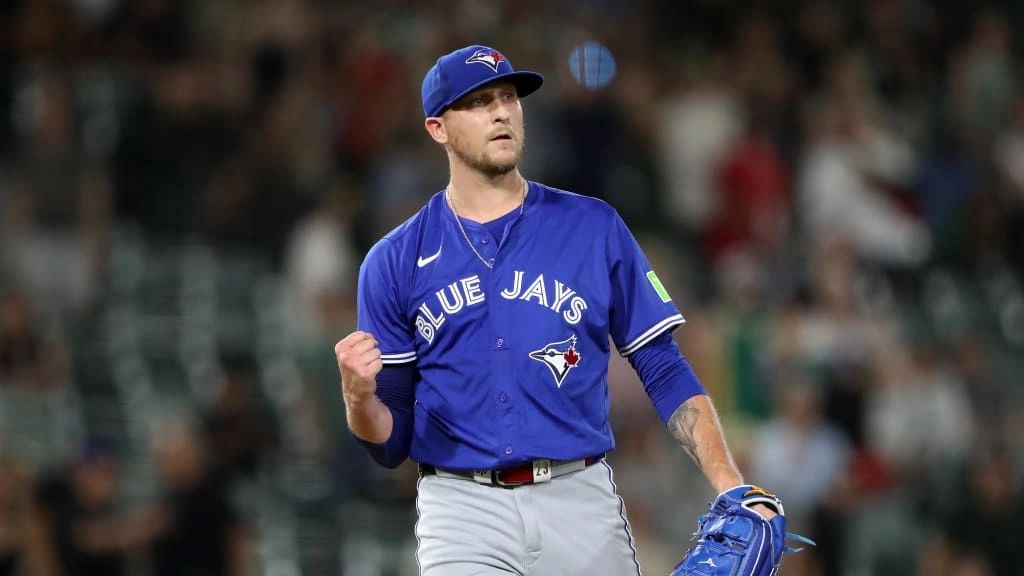
Chicago Cubs – Jameson Taillon, P (4/85); Jeff Hoffman, P (10/212), Ronel Blanco, P (18/361)
The Cubs landed a quality starter in Taillon 85 picks into this draft. Though he’s now 34, Taillon remains a stalwart in the MLB Cubs’ rotation heading into 2026. Like Helsley, 2025 wasn’t Hoffman’s best vintage as a closer. A new contract brought Hoffman to Toronto where he was good, not great. After back-to-back sub-1.00 WHIP seasons in 2023 and 2024 in which he held opponents to a .175 OBA, the MLB Blue Jays are hoping to see a return to that level of dominance from Hoffman. Blanco introduced himself to baseball fans early in the 2024 MLB season with a no-hitter and then went on to complete a fantastic 30-start campaign with the Astros that featured a 1.09 WHIP and .188 OBA. He started 2025 strong but his season ended early with Tommy John surgery in June. You can expect Blanco to surface in the majors after the All-Star Break and log about 10 starts, according to Fangraphs’ projections.
Cincinnati – Dominic Canzone, OF (2/49); Jack Perkins, P (8/171)
At pick 49, impact strongside platoon hitters were in short supply. The Reds plucked Canzone with that pick, shrinking the supply even more. The lefty is somewhat overlooked in the potent MLB Mariners lineup, however, he provides a steadying presence with grindy and productive at-bats, and his power profile works in T-Mobile where pull power plays in rightfield and a spray approach benefits from the park’s long alleys. Canzone didn’t remain a Red for long as he was turned to Toronto in a headline deal that netted CF Julio Rodriguez. Don’t sleep on Jack Perkins, as it won’t be long before he’s closing games for the Athletics, possibly before they debut on The Strip. The 26-year-old right-hander has a heavy fastball, a wipeout slider and deceptive cutter that could end up as his out pitch as it develops. The MLB Athletics aren’t expected to have a very good pitching staff in 2026, but that doesn’t take anything away from the fact that Fangraphs projects Perkins to have the lowest ERA on the team this season. If anything, that ranking is recognition of the expectation that Perkins is part of the club’s long-term plans.
Detroit – Dylan Beavers, OF (5/93); Grant Taylor, P (7/139); Dustin May, P (13/259)
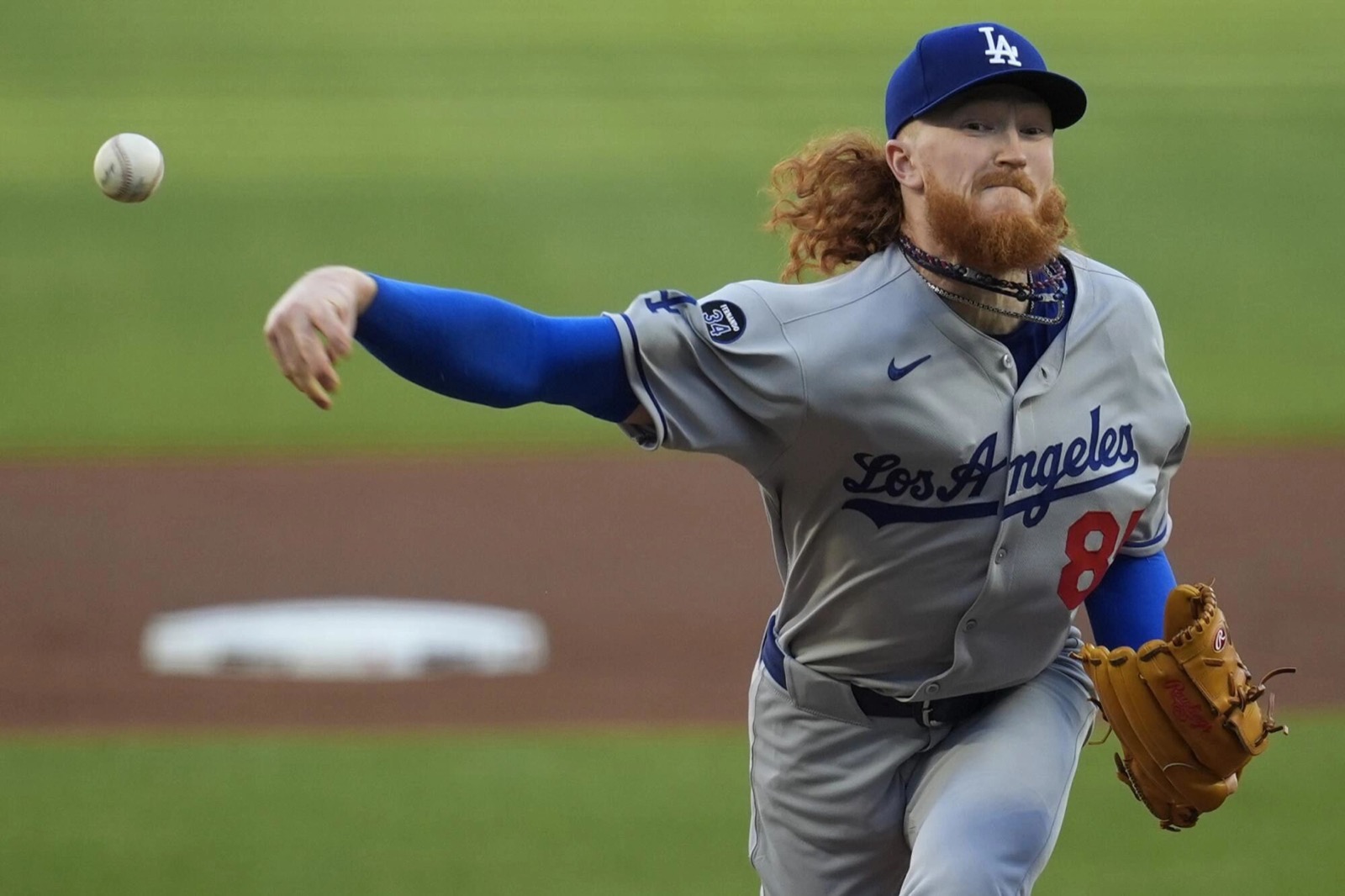
Shortly after netting Beavers with the 93rd pick in the draft, the outfielder landed as the 21st top prospect in Baseball America’s Top 100. Beavers grinds at-bats and leads with a strong hit tool, but has enough speed, glove and arm to stuff other categories, as well. The question is power, and he’ll get a chance to answer that question in 2026 as he enters Spring Training penciled into a strongside platoon role in an outfield corner. Once healthy, Taylor moved through the MLB White Sox system quickly as a starter. He relieved exclusively in Chicago last summer and is slated for a setup role this summer. PitchingBot shows the righty’s 5-pitch profile with a “stuff” grade of 74 on the 20-80 scale. The relief role is a pre-cursor to Taylor taking his 5-pitch mix into the rotation in 2027. Hoping for a fresh start, May signed with the Cardinals and has been inserted into their rotation as the No. 2 starter. May was abysmal last summer with the MLB Dodgers and Red Sox due to command and velo issues. When he returned to the majors last May after a 21-month hiatus, he was averaging 95 on his four-seamer, which was down from 97 in 2023 and 98-99 from 2019 through 2022. He blipped up to 96 in July – and his results improved modestly – before fading hard in the ensuing months. Command was also an issue, especially with his fastball. If he can stay healthy and learn how to be effective with less pure stuff – the classic pitcher versus thrower dichotomy – May could be a comeback candidate.
Houston – Troy Melton, P (2/47); Nathan Church, OF (15/311); Porter Hodge, P (20/378)
Melton is a good candidate to receive significant innings with the MLB Tigers this summer, and he’s a sleeper pick to have a great season. He boasts a 6-pitch mix and has strong command of all 6 pitches, 4 of which are fastball variations. If his slider and curve improve, he could be a long-term steal. The Tigers are really counting on Melton’s development, especially with Tarik Skubal, Casey Mize and Jack Flaherty all becoming free agents as soon as Detroit’s season ends. With the MLB Cardinals in full rebuild mode, Church will have plenty of opportunities to lock down an outfield spot with his exceptional hit tool and his wheels and glove, which are good enough for centerfield. A revelation in 2024, and an enigma in 2025, Hodge will look to bounce back this summer with the MLB Cubs. He sports a 2-pitch mix – a heavy fastball and a late-breaking slider – and throws everything hard. Once a closer prospect, Hodge has a chance at redemption in 2026 and he’s not yet 25.
Kansas City – JJ Bleday, OF (11/234); Adrian Del Castillo, C (15/313), Luis Mey, P (20/377)
Bleday was an under-the-radar acquisition for the MLB Reds this Winter, suggesting that perhaps Cincinnati is starting to figure out baseball. Now in the post-hype prospect phase, the former Vanderbilt standout will anchor the strongside of the leftfield platoon for the Reds. Ignore 2025 from a fielding perspective – Bleday is a plus-fielder – and focus instead on his consistently solid plate approach. Bleday negotiates walks, giving him a foundation upon which to build back his confidence. Del Castillo will never be your primary catcher, but his power and plate approach, combined with his left-handedness, make him an ideal strongside DH candidate, which is the role he’s expected to play this summer in Arizona. Still only 26, he’s a hit-first catcher. Mey is a lottery pick. The 24-year-old Dominican primarily throws 2 pitches, both of them extremely hard. His fastball has hit 103 and sits above 100, and his slider touches 90. In 2025, the Reds added a sinker, which Mey throws in the 99-101 range. He showed improving feel for the sinker and that could be the key to unlocking his massive closer potential. In its forecast for the Reds 2029 starting lineup, Baseball America projects Mey as the team’s closer.
Los Angeles – Mike Burrows, P (2/50); Slade Cecconi, P (5/117); Ben Williamson, 3B (7/143); Edouard Julien, P (18/363)
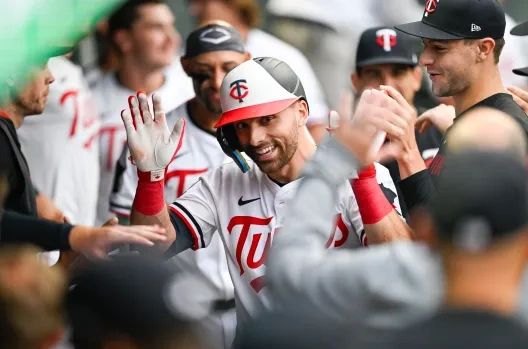
The MMDBL World Series Champion Dodgers sniped early and often and there was an unintended theme – guys getting fresh opportunities in new places. Cecconi doesn’t fit this theme, per se, as he was a Guardian in 2025 and is projected as Cleveland’s No. 3 starter this summer. Cecconi notched 132 innings last summer and will be expected to do more in 2026, and that will start with keeping the ball in the park so his high-command profile has a chance to play up. Back to the theme – Burrows goes from Pittsburgh to Houston, Williamson goes from Seattle to Tampa, and Julien goes from Minnesota to Colorado. The fits for all are excellent. Burrows will lock down a rotation spot and look to replace Framber Valdez as the new grass-cutter at Minute Maid. Burrows is a master at staying down in the zone and inducing light contact, though he was touched for the deep ball more than is optimal. The MLB Astros thought enough of Burrows to yield 2 of their top 10 prospects. Williamson was tepidly penciled in at 3B for Seattle before being dealt to the MLB Rays in the Brendan Donovan deal. The glove-first prospect will get a long runway to own the weakside platoon at 2B and play a super-utility role in Tampa. Julien – known as “Eddie Jewels” to his walk-loving cult followers – was the heir apparent to Kevin Youkilis’ mantle until his hit tool went missing in the Twin Cities. Julien is now the starting second baseman for the MLB Rockies and an extremely strong candidate for a massive rebound. The walks are still there, so all he has to do is hit .245 and pop 20+ homers, which seems immensely plausible.
Milwaukee – Jac Caglianone, OF (4/86); Jacob Melton, OF (11/224)
Caglianone, by most accounts, was the hitting prospect equal of MMDBL No. 1 overall pick 1B Nick Kurtz. In their rookie seasons, however, Kurtz did his thing, slashing .290/.383/.619 with 36 homers while amassing 4.6 WAR in 117 games; and Caglianone did his thing, slashing .157/.237/.295 in 62 games enroute to a -1.6 WAR. The 6.2 WAR difference between the two isn’t likely to persist – not because we can expect a Kurtz regression, but we’ve likely seen the worst of Caglianone. The 6-5 lefty slugger slashed .337/.408/.617 in 304 plate appearances at AAA and AA in 2024 while posting a 10.2% walk rate. Caglianone’s minor-league track record, combined with some promising underlying metrics in his MLB debut, provide hope for a better showing in 2026. The promising metrics are a league-average whiff rate coupled with a .172 BABIP. Contact was not the issue; a lack of hard contact was, and that is generally fixable. In Melton, the Brewers acquired a top prospect who will be given every chance to lock down an outfield spot in Tampa this summer. Melton is a power-speed prospect who will post league-average walk and hit rates if he meets expectations.
Minnesota – Brandon Lowe, 2B (3/55); AJ Blubaugh, P (8/175)
The Twins win now and somehow seem to build for the future at the same time, as evidenced by last year’s 1st Round selection of 3B Junior Caminero. This year, the Twins’ most prominent gotcha picks meet the ‘now and later’ theme. Lowe is a career 16.9 WAR player who fills a gaping hole at 2B for the club. He’s on the wrong side of 30, but there are no signs of slowing down. Last year, Lowe clubbed 31 homers and slugged .477 from the keystone while amassing 1.7 WAR. Now with the MLB Pirates, Fangraphs’ projections have him posting 1.4 to 2.4 WAR, most likely making him a multi-year option for the MMDBL Twins. Blubaugh will likely start the season in the minors for the MLB Astros, however, his stuff is too good to hold down and he’s likely one Lance McCullers Jr. injury away from Minute Maid Park. In 2025, Blubaugh relied primarily on a four-seamer (94 mph) and slider (81), while also mixing in a change-piece (85), cutter (86) and curve (77) and adding a heavy sinker (93) to his repertoire. The righty provides some current-year value but he leans heavily toward a future producer for the MMDBL Twins.
New York – Chase Meidroth, 2B (2/28); Jared Koenig, P (7/155)
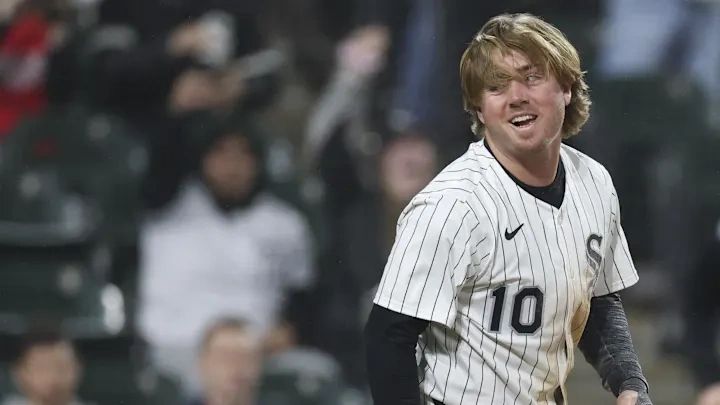
Meidroth is an on-base monster who was born with a discerning eye and likely will torment MLB pitchers for years to come with close takes. He doesn’t hit for power, and his glove and speed are OK-ish, but he’s not Nick Madrigal, either. He projects to have more gap power and will likely get to double-digit homers at some point, perhaps as soon as this season. Meidroth’s elite contact skills could make him a .300/.400 guy, though a .280/.400 line is more likely given he hits from the right-side. One of the consistently good left-handed relievers in the majors last year was Koenig, who pairs an elite curve with a four-seamer he places at 95+ with arm-side run. Koenig is once again in the setup role for the MLB Brewers.
Philadelphia – Tyler Mahle, P (2/51); Brandon Sproat, P (6/136); CJ Kayfus, OF (10/216)
Mahle is a complete Jerryball selection. There’s no pitcher in baseball who can claim to be the Cy Young of reverse-righties other than Mahle. Last year, he held lefties to a .179 OBA and his career splits are 0.226 versus lefties and 0.260 versus righties. His reverse-ness is no fluke – it’s an annual fact – and that makes him a perfect fit for Philly and Jerryball. Mahle signed with the MLB Giants and is penciled in as their No. 3 starter for this summer. Sproat is an example of being in the right place at the right time. The righty was a top prospect heading into the MMDBL draft (81st ranked by Baseball America), but he was also likely the odd man out of the MLB Mets rotation behind fellow prospect Jonah Tong. He was 8th on the Mets starting pitching depth chart. Two days after Sproat was selected by the MMDBL Phillies, he was shipped to the MLB Brewers in the Freddy Peralta deal. He shows 6th on the Brewers’ rotation depth right now, but if he doesn’t make the Opening Day roster he won’t be long for the minors. Kayfus will be the MLB Guardians’ DH this year, though he’ll also get some run at 1B and the corner outfield. His game really has no weakness – he solid MLB-average in every tool – but his plate patience is above average and that could make the hit tool play up. Kayfus might wind up as a strongside platoon-only player, but he’s got upside worth investing in.
Pittsburgh – Carter Jensen, C (2/35); Parker Messick, P (5/115)
Jensen is a shockingly good prospect with a high floor and ‘sky’s the limit’ ceiling. A week after Pittsburgh made the Royals’ prospect a Pirate with the 35th pick in the MMDBL draft, Baseball America listed Jensen as the game’s 11th best prospect with a 60 grade on the 20-80 scale. He’s not going to supplant Salvador Perez as the MLB Royals’ catcher this season, but he will get full-time reps between a corner outfield spot and spelling Salvy to save his knees. Jensen is so highly regarded and has a well-lit path to a full-time role that it’s being reported that the Tigers almost called his name in the 1st Round of the MMDBL draft 15 picks earlier. Messick had a cup of coffee in the majors in 2025 and showed fairly well. He’s currently the 6th man in the MLB Guardians’ rotation mix, however, he’s likely to eventually leapfrog one or more of those ahead of him. Messick is strong across the board with a solid-average four-seamer, curve and slider. His ‘out’ pitch is a wicked changeup that he commands well, making it already a plus offering. Overall, his stuff won’t blow you away but his command makes everything play up. He’s MLB ready and has a higher ceiling than 2 or 3 of the 5 currently listed above him in the MLB Guardians’ rotation mix.
Seattle – Abner Uribe, P (1/21); Andrew Benintendi, OF (8/161)
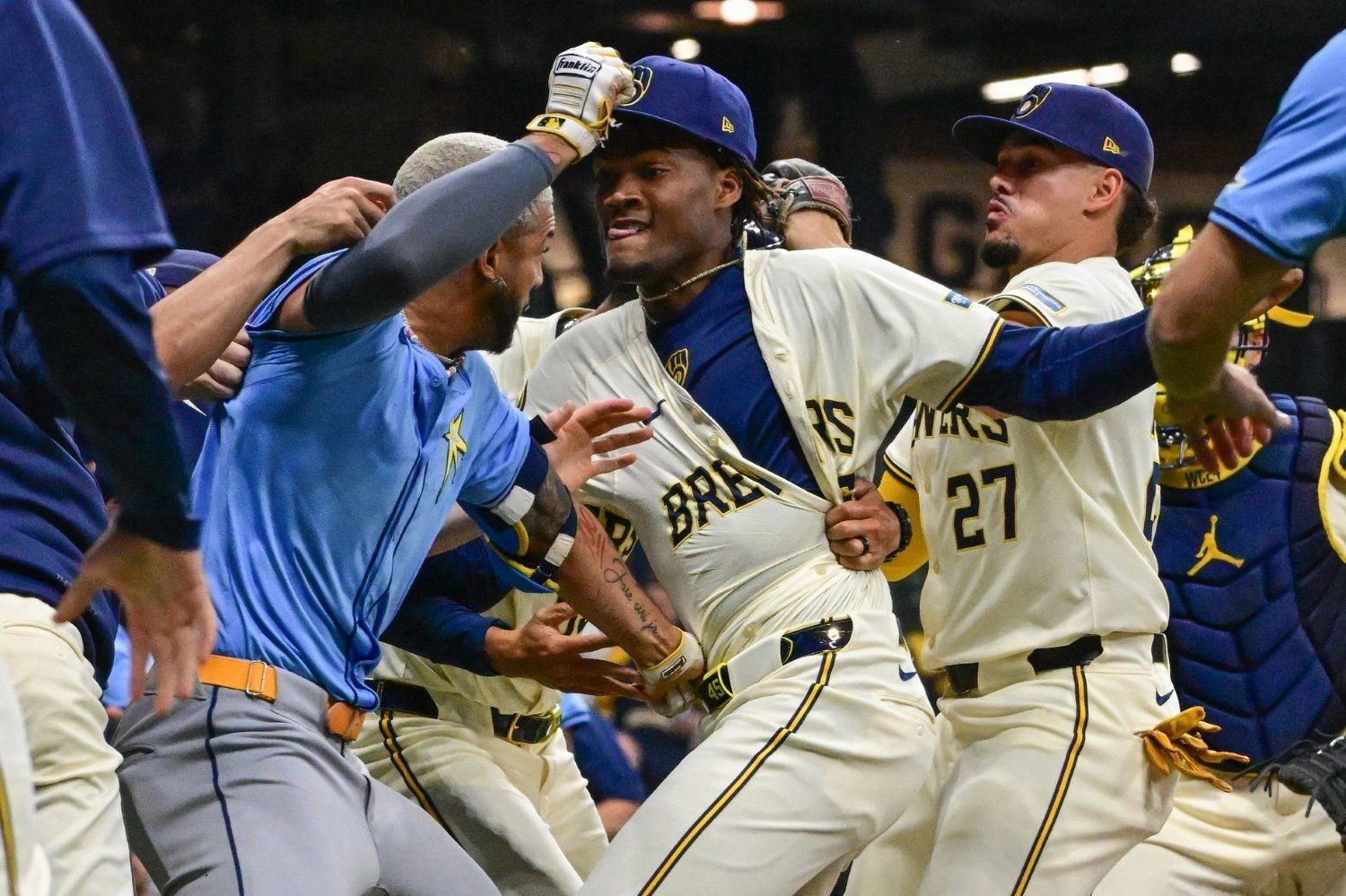
Seattle threw down the gauntlet with the Uribe pick. A common thought swirling in the back on every GM’s mind is, “when will the reliever run begin?” Every team needs relievers every year, and usually lots of them. With the average start duration shrinking (see “Five and Two-Thirds Freddy”), having 2 or 3 lockdown relievers with lots of innings is table stakes in the MMDBL for any team that is seriously contending. It doesn’t get more lockdown than Uribe based on sheer card value for 2025, and he’s young (25) and likely to be one of the game’s best closers for a long time. Plus, he’s fun to watch. When Seattle snagged Uribe, it started the first reliever run of the MMDBL draft and provided the Mariners an anchor to what is shaping up to be one of the league’s best bullpens. Benintendi earned a “clutch” and a reverse-lefty hitting card that is diabolical to pair with a card versus righties that is playable. Once a top prospect, Benintendi now profiles as an aging veteran whose star didn’t burn as bright as it could have, or as long as was expected. He crushed the minors, rising 3 levels to the majors in one summer, and had a solid debut with the Red Sox. So what happened? Injuries slowed Benny, he never developed the plate patience necessary to get to his pitch on a consistent basis, and while his walk rate is essentially league-average, he rolls over to the right-side way to often (due to not getting to his pitch on aa consistent basis.) But let’s reflect on 2021-22 when he batted .290 over 2 full seasons. The elite hit tool is still in there, and he’s in the perfect spot to let it eat – he's now the clubhouse veteran on an upstart White Sox team filled with burgeoning young talent. It would not be shocking if Benny hits .285 with 20+ homers this summer.
San Francisco – Matt Svanson, P (2/40); Riley O’Brien, P (3/62); Garrett Mitchell, OF (8/168)
Svanson boasts a dynamic card for this year – one of the best reliever options in the Dynasty deck. At 27, Svanson is locked into a setup role with the Cardinals and offers some upside. He has a solid 3-pitch mix, though the knock on him was iffy command. In his MLB debut season last summer, Svanson showed better command that he did in his last 2 minor-league seasons, and he continued his minor-league trend of suppressing homers. The Giants also landed Svanson’s bullpen running mate in Riley O’Brien, the projected closer for the MLB Cardinals. Never was there a more Irish name in the majors (Kyle Finnegan is close). O’Brien’s stuff evokes the refrain from the 2003 Blink 182 song Down (“down, down, down, down”) as he tosses a sinker and slider to mask when he throws his elite curve. Hitters know the ball will be, ahem, down but they don’t know the specific shape or speed, which enables O’Brien to induce an exceptionally high number of worm-burners (53% groundball rate in 2025) and keep the ball in the park. Mitchell was once one of the best outfield prospects in the game with a rare power and speed combo reminiscent of Jim Edmonds, who had a 64.5 WAR career. The only thing derailing Mitchell has been 2 significant shoulder injuries that essentially wiped away 2 of his last 3 years, and an oblique injury that ended 2022 early. There is concern the injuries have permanently damaged Mitchell’s labrum. If this is the case, we might be robbed of seeing him patrol the outfield in the reckless and exquisite fashion he demonstrated in his brief start-and-stop stints with the MLB Brewers. The Mitchell pick is a lottery ticket that might pay big if the former UCLA star can stay healthy and play mentally unencumbered.
St. Louis – Josh Bell, 1B (2/38); Jahmai Jones, OF (3/66)
The Cardinals made a lot of trades, which always muddles a review like this. If there was one theme, however, it was that the Cardinals are bringing new bats to the ballyard this summer. Their first 2 picks, OF Daylen Lile and OF Isaac Collins, began the offensive rebuild; and their next pair of picks in Bell and Jones capped it off. Bell is not what everyone thought he’d be at this point in his career, but in 2025 the 1B/DH mashed righties to the tune of .262/.346/.450 with a .188 ISO and a 122 wRC+. More importantly, he was gifted a card that plays at a 5%-10% premium from that slash line with a 6.4% homer probability and no at-bat limitations. Now 33, Bell is expected to be in the Twins everyday lineup at DH or 1B, so he’ll have an opportunity to piece together another productive season. With Lile, Collins and Bell firmly in the fold to gird the batting order versus righties, Jones was added to make the lineup versus lefties meaningfully more potent. Jones is a lefty killer and he was by far the most dominant lefty killer in the free agent pool and, like Bell, he has no at-bat limitation. Jones will occupy the same role for the MLB Tigers this summer and will likely be a keeper going forward as long as he keeps terrorizing lefties.
Texas – Matt Wallner, OF (2/53); Jake Bauers, OF (8/150)
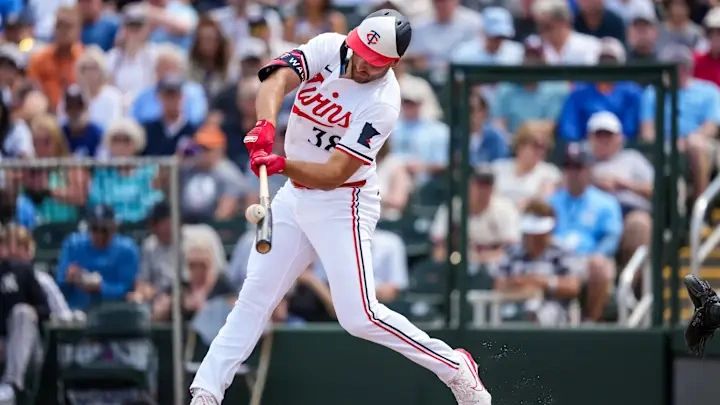
It’s not every day that a cleanup hitter in his prime falls to you with the 53rd pick, but Texas swooped in on Wallner at just the right time. Like a lot of veterans that fall in and out of the MMDBL’s free agency pool, Wallner has had an inconsistent MLB career. The strikeout rates will always be high (career 32%), but what hurt him last year is that he had the lowest K-rate of his career at 29.1%, about 6 percentage points below his career average entering the season. Relatedly, his walk rate was his highest ever (11.7%) and his BABIP was his lowest ever (.228). How is a lower K-rate an indication of a problem? Stick with me here. Wallner fell into the trap of remaking his plate approach to take more walks and whiff less, and with guys as hulking as him this typically translates into more walks and fewer Ks but at the expenses of less hard contact. Case in point for Wallner – in 2025, he had the lowest hard-hit rate, lowest line drive rate and highest soft-contact and groundball rates of his career. Big guys like him have holes in their swings – it’s an anomaly when they don’t – so he should be taking his best hack every time. We want Meat and Potatoes from Wallner, not Quinoa and Kale. Expect a bounce back in 2026 as Wallner applies his lessons learned from 2025. Bauers is another enigma. He can put together some truly special 10-to-12 pitch at-bats and then look lost the next time up. Another former top prospect, he caught fire late last season and was one of the MLB Brewers’ best hitters during that stretch. He’ll get many reps off the bench at 1B, DH and in the corner outfield this summer for the Brewers, and he’ll likely generate a walk rate in the 12-14% range with an OBP 100 points or more higher than his batting average, while producing massive splits favoring matchups against right-handed pitchers. He’s got some speed and can pick it and has matured into a double-digit homer guy at this point in his career.
Toronto – Jalen Beeks, P (10/210); Matthew Liberatore, P (14/280)
Toronto’s big fish during the draft were landed through trades, versus picks. The Jays effectively remade their lineup, addressing the flaw that was exposed last year when they couldn’t produce enough quality left-handed at-bats to back up their solid pitching. When the Jays turned to pitching in the draft, they landed one of the better left-handed relievers and a top-of-the-rotation starter. In his 57 1/3 innings last summer for the MLB Diamondbacks, Beeks produced reverse-lefty results, holding righties to a .190 OBA and lefties to a .218 OBA with OPSs slightly above .600 both ways. Importantly, he kept the ball in the park. Beeks remains unsigned by an MLB team and it seems as though his 2026 journey will begin much like his 2025 ride with Arizona as a last-second addition to a major-league camp as a non-roster invitee (NRI). Liberatore is a top-of-the-rotation starter in name – he’s the No.1 pitcher on the MLB Cardinals’ rotation depth chart – but he’s not yet an “ace” by traditional standards. By “traditional standards” we mean a pitcher who you can count on for 6-plus quality innings 80% of the time, a bulldog who ends losing streaks and gives his team a chance to win every time he takes the mound. The former 1st Round pick is still only 26 and last year he posted 1.8 WAR in his first full-time shot in the rotation. He earned quality starts (defined as 3 or fewer earned runs over 6 or more innings pitched) in 11 of his 29 starts. However, if his MLB development track is anything like his minor-league development track, he should be better in 2026, better in 2027, and so on.
Washington -- Roki Sasaki (2/33), Carson Williams, SS (7/150)
At this time a year ago, Sasaki was the consensus best prospect in baseball -- a 70-graded prospect by Baseball America and 65 by Fangraphs. A year later, and he's being drafted 33rd overall behind guys like Jacob Misiorowski, Cade Horton, Chase Burns, Bubba Chandler, Nolan McLean, Noah Cameron, Shane Smith, Cam Schlittler, Emmet Sheahan, Hurston Waldrop, Trey Yesavage, and Braxton Ashcraft. Really? It's fair that Sasaki didn't live up to the Year 1 hype, but he is only 24 and in the MLB Dodgers' rotation. He still has an 80-grade splitter, a 60-grade slider and an above-average fastball -- all the tools are in place once command catches up. The command issues really flared up last year when he threw his fastball, and his four-seamer was down a couple ticks from his career in Japan. In Japan, he sported a K:BB ratio in the range of 5- to 7-to1 with 11 to 13 whiffs per 9. Last summer with the MLB Dodgers, his K:BB ratios was barely 1:1 and he walked 5.5 per 9 innings enroute to a sub-zero WAR. Perhaps it was how bad Sasaki pitched, and how bad his underlying metrics were, that caused his MMDBL free-fall. Regardless, he was the Yankees' closer in the playoffs and pitched some key innings, and he only pitched 36 regular-season innings in accruing those bad metrics that may have scared away other GMs. The big question now is whether or not Sasaki is a starter or a high-leverage reliever over the long-term. If Sasaki achieves his ace projection from a year ago, the Nationals will have had the steal of the 2026 MMDBL draft, no question. This could be the year that Williams finally replaces Taylor Walls as the MLB Rays shortstop. Williams is 22 and he's a better defender than Walls, who seemingly continues to hold onto the starting role because of his defense despite being a career .195 hitter and having a negative Outs Above Average (OAA). Williams is a gold-glove caliber shortstop, so even if he hits like Walls he'll be a plus-WAR player. If there's an upside hitting comp for Williams currently in the majors it would probably be Willy Adames with his right-handed power, ability to take walks, and middle-of-the-pack hit tool. Adames is a career .244 hitter. If Williams reaches that level as a hitter, combined with his glove, he'll be an all-star.