
Top-Level Hitting Talent Makes This Draft Buffet All-You-Can-Eat
Part II of the MMDBL Rookie & Free Agent Draft buffet shouldn’t be construed as seconds. Not by any means. Many of the offerings on the position player end of the food bar will be heaped on a team’s draft plate during the first time through.
For instance, I can’t imagine the feeling of being full, happy, and content about the future that a GM will have after drafting A’s 1B Nick Kurtz, Braves C Drake Baldwin, White Sox SS Colson Montgomery, or Red Sox OF Roman Anthony. In fact, it’s likely that at least 2 of these 4 are gone by the 5th pick in January’s draft, but that depends on the needs and preferences that shape each team’s draft strategy. Pitchers are always in high demand – you can never have enough pitching, as the saying goes.
Let’s look at the position player end of the buffet, position by position, starting with catchers and moving around the horn.
Baldwin, Teel Headline Catching Crop
We’d be talking more about Drake Baldwin if it wasn’t for Nick Kurtz’s insane rookie season. Baldwin and Kurtz won their league’s
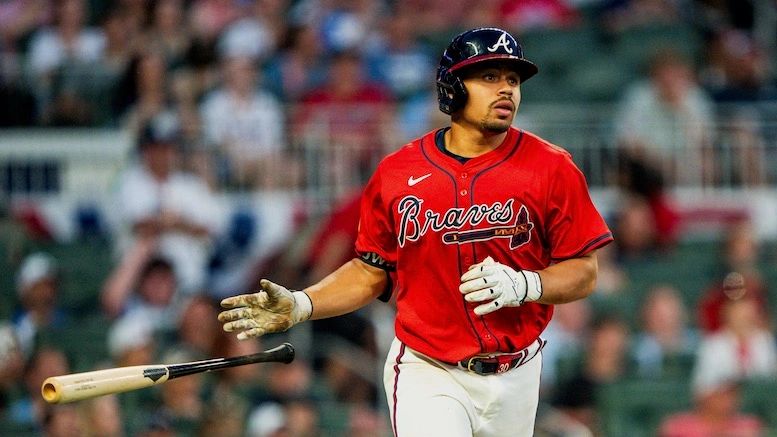
respective Rookie of the Year (ROY) awards – Baldwin in the NL, Kurtz in the AL – but Kurtz’s season was MVP-worthy in a world without Aaron Judge and Cal Raleigh. Baldwin posted a strong slash line for any position, let alone catcher, going .275/.341/.469/.810 with 19 homers. As a lefty behind the dish, he’ll extend a team’s lineup versus right-handed pitching, turning the usual catcher dead spot into a source of offensive contribution, and he hits lefties capably. If there is a question mark, it’s his defense. His Defensive Runs Saved (DRS) were modestly negative, he only threw out 14% of base stealers, and his framing was below average according to Fangraphs metrics. Baldwin graduated to the majors as a 55-grade prospect profiling as a hit-first prospect, amassing 3.1 WAR.
Kyle Teel came to the White Sox from Boston in the Garrett Crochet trade – along with Braden Mongomery, who we’ll be raving about next year, and Chase Meidroth, who we’ll be talking about in a minute – and he instantly laid claim to the future of White Sox catching. Teel slashed .273/.375/.411/.786 and popped 8 homers in 297 plate appearances (PAs). Teel overcomes average power potential with elite walk rates that carried into the pros. Like Baldwin, he’s a lefty, though he’s struggled to hit lefties throughout his career and may settle into being a strongside of the platoon option long-term. Teel’s prospect profile suggests he’ll be a better defender than Baldwin, though they were about equally below-average in every aspect in their MLB debuts. He was a 50-grade prospect upon callup and posted 1.9 WAR.
Predicting if Dynasty will impose at-bat (AB) limits on catchers is not an exact science. A back-up catcher can be on the MLB roster most of the season and not be limited whatsoever. Meanwhile, a late callup can amass just as many ABs in a shorter period of time yet face significant usage limitations. Usage limits will determine if Tyler Heineman is starting for an MMDBL team next summer or merely a platoon-role backup. The 34-year-old switch-hitter mauled left-handed pitching with an OPS exceeding 1.000, and posted a .683 OPS versus righties, which is respectable for a catcher. Given that he spent over half of the season backing up Alejandro Kirk in Toronto and taking reps versus lefties, it’s possible Heineman is unlimited despite just 149 ABs, though it’s likely he faces some restriction versus southpaws. Heineman’s part-time performance was so good that his 2.1 WAR is second among catchers behind only Baldwin (3.1 WAR) despite 256 fewer ABs.
The rest of the catcher pool that’s worth a callout is a mix of veterans with decent performances and prospects who showed flashes in their 2025 MLB debuts. Among the veterans, Miami’s Liam Hicks posted a 1.0 WAR while slashing .247/.346/.346/.693, Baltimore’s Alex Jackson put up 1.1 WAR with a wRC+ (weighted-Runs Created plus, where 100 is average and results are league- and park-adjusted) of 111.4, the Cubs’ Reese McGuire posted 0.8 WAR built largely on stellar defensive metrics, and the Cardinals’ Yohel Pozo put up enough offense to platoon versus lefties while adding solid defense.
Among the prospects, there’s hope for a bright future with at least 6 players who debuted last summer. Augustin Ramirezbelted 21 homers, slashed .231/.287/.413/.701, and posted a .182 ISO (isolated power, calculated as SLG minus AVE) which was 6th among all qualified catchers ahead of names such as Yainer Diaz, Kirk, William Contreras, and J.T. Realmuto. Ramirez lost catching time to Hicks as the season wore on and figures to DH when he’s not splitting catching duties with Hicks. Ramirez graduated as a 50-grade prospect with a profile built on prodigious power potential.
Edgar Quero is in a similar spot as Ramirez. He had a serviceable debut last summer but figures to spend time as DH while splitting dish time with Teel. Quero has better bat-to-ball and defensive skills than Ramirez but can’t match the power. A 50-grade prospect, he slashed .268/.333/.356/.689 with 5 homers in 403 PAs. Someone who can match Ramirez’s power is Baltimore’s Samuel Basallo. Basallo’s debut was ugly – he batted .165 in a small sample size – but his power is light-tower, literally 80 on the 20-80 scale. A 60-grade prospect, Basallo obviously won’t supplant Adley Rutschman as the Orioles’ everyday backstop but he is currently penciled in as the DH and backup catcher – a testament to how much the club believes in his power.
Another catching prospect buried behind a superstar, Dalton Rushing, also had an auspiciously poor start to his major-league career, batting just .204 while posting negative WAR. The Dodgers’ Rushing is not only behind Will Smith at catcher but something tells me his bat isn’t welcome in the DH slot, either. For now, it looks like LA will keep Rushing on the MLB roster as a part-time catcher, though he’s a candidate to be moved. Rushing may be the most well-rounded of all the catching prospects. He grades out as a 60 with good hitting, solid power, good defense, and average speed. Frankly, he’s a left-handed version of Smith with better hitting (from a prospect-grade perspective), lesser defensive skills, and nearly identical physical stature. Two other prospects deserve mention, and both had excellent offensive debuts, albeit with miniature sample sizes. The Cubs’ Moises Ballesteros is a 45-grade prospect packed in a logjam with Miguel Amaya and Carson Kelly, though he figures to possibly supplant one on the MLB roster at some point this summer. Carter Jensen is not going to replace Salvador Perez anytime soon, but the 50-grade prospect showed well enough in his cup of coffee last summer to likely earn a bench role for the Royals.
Let’s Just Call it Kurtz Korner
For draft-eligible players whose primary position in 2025 was first base, there’s the A’s Nick Kurtz and that’s about it. There are a few revivals to discuss, and some long-range prospects of note, but this is basically a section of the blog dedicated to gush over Nick Kurtz, his rookie year dominance, and the likelihood that he’ll be chasing MVPs for a decade plus.
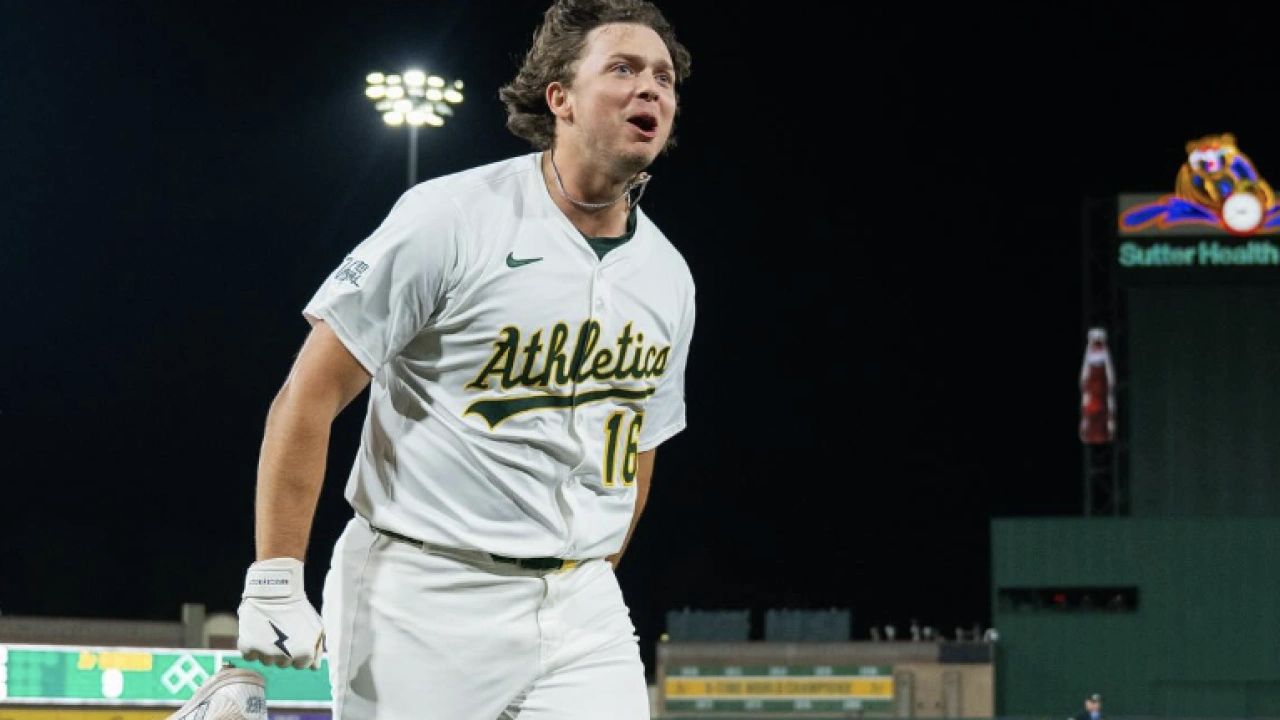
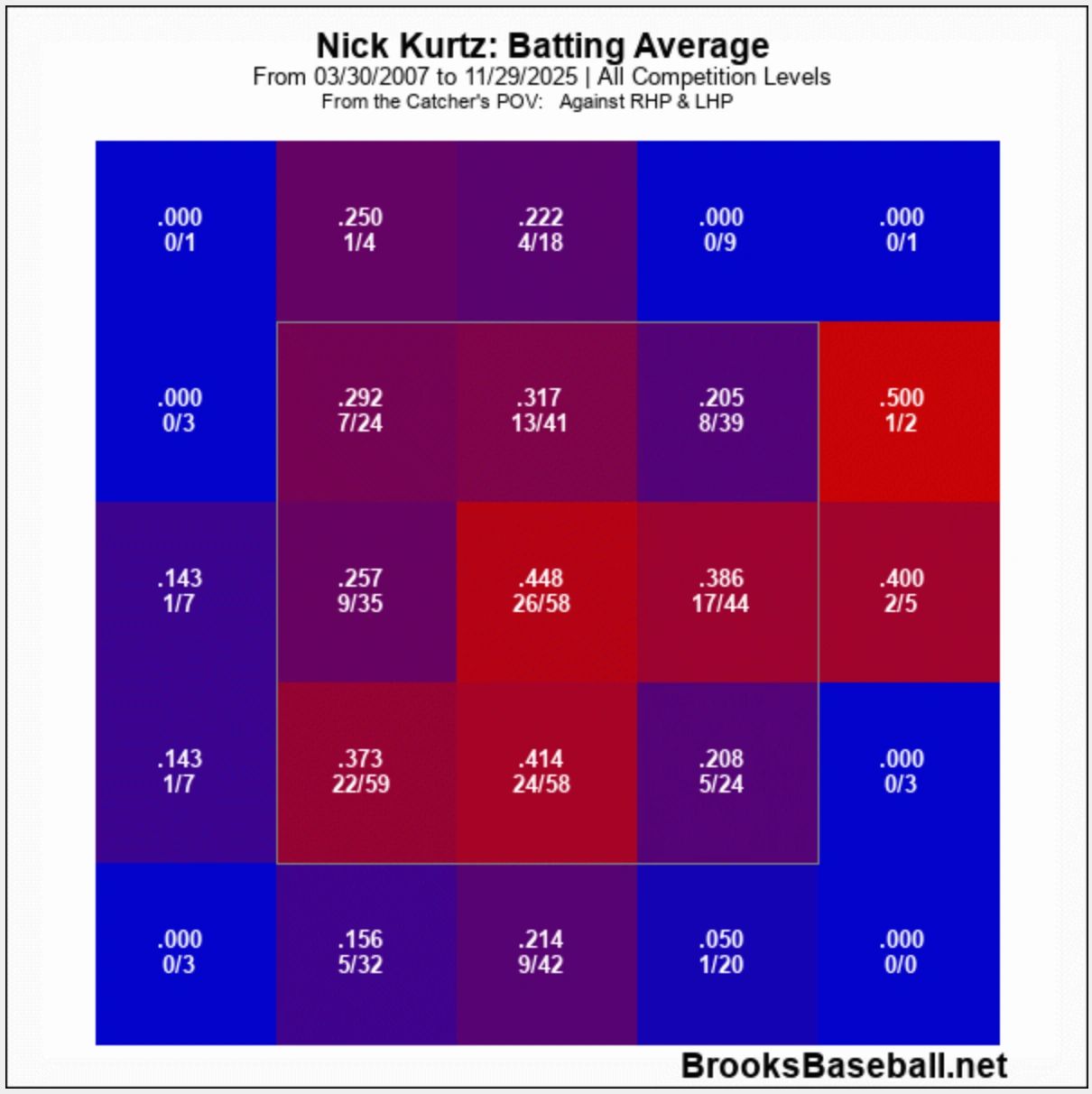
Kurtz made his debut April 23 and amassed 489 PAs, which should be more than enough to have an unlimited card. He carried his elite walk rates into the majors, earning a free pass 13% of the time, though his whiff rate increased from the mid-20s in the minors to 31% in the majors. He hit 36 homers and slashed .290/.383/.619/1.002 enroute to a 4.5 WAR season. Among players with at least 400 PAs, Kurtz posted a 4th best .329 (ISO) and a 3rd best 172 (wRC+), behind only Aaron Judge and Shohei Ohtani in both categories, with the addition of Cal Raleigh in ISO. In terms of wOBA (linear-weighted OBA), Kurtz was second behind Judge; and his zone chart shows solid batting average in the zone and good discipline to lay off pitches out of the zone, especially away.
If there is a chink in his armor, it might be defense. Kurtz posted +2 DRS but was -5 outs above average (OAA); and of the 60 who played first base for at least 200 innings (approximately 23 games), Kurtz had the lowest fielding percentage (.988) as he committed 10 errors. From a profile perspective, Kurtz’s defense is expected to get better. In fact, he graduated as a 55-grade prospect with an upside of 55 defense. His other key metrics are plus-to-elite level – 55 hit, 60 game power, and 65 raw power (OK, so he’s only a 30-grade runner and, folks, that’s even bad for a first baseman). Kurtz will be 23 on Opening Day 2026 and whichever MMDBL team calls his name in January can expect to set and forget one spot on the diamond for probably a decade as he’s been healthy and productive his entire baseball-playing career.
What’s next for teams needing to fill a first base need this January? Journeyman Ty France is probably the next best thing going in the first base free agent pool after posting 0.9 WAR while slashing .257/.320/.360/.681. His 92 wRC+ is not inspiring but his 10 OAA are Fielding Bible-worthy. France made the Blue Jays’ World Series roster but is now a free agent, so there’s no saying with certainty if he’ll have an MLB job come spring. Jake Bauers is probably a better option than France from an offensive perspective, though with only 218 PAs in the majors last summer he’ll likely face some usage limitations. The lefty was hurt much of the year, but when he returned to Milwaukee in late August the Brewers kept finding ways to get him in the lineup, whether at first or in the outfield. More athletic than most first basemen, Bauers will provide average defense and sneaky stolen base speed. He’s a liability versus lefties, but he slashed a respectable .238/.358/.411/.769 with .173 ISO versus righties in 2025.
Dominic Smith has gone from perpetual Mets prospect to journeyman, and the middle-of-the-order stalwart once envisioned is now a distant memory. At 30, however, Smith may be morphing into his most useful major-league phase as a left-handed bench bat who starts enough to get 200-300 PAs a year. Smith only had 225 PAs for the Giants in 2025, so he’ll likely face limitations. He slashed a useful .296/.343/.436/.779 versus righties while posting 0.4 WAR. For the immensely desperate, two other full-time options are Rowdy Tellez (.228/.276/.443/.719, 17 homers) and Wilmer Flores(.241/.307/.379/.686).
Teams looking to future solutions may want to consider Cincinnati’s Sal Stewart or San Francisco’s Bryce Eldridge. Stewart is a righty who is likely to split time at first with Spencer Steer in 2026 while DH’ing the rest of the time. A 45-grade prospect, Stewart’s hit tool will have to carry him as he’s likely to be a below-average defender wherever he plays. It’s worth noting he mostly played third in the minors and did play 6 games at the hot corner for the Reds last summer. Eldridge is a prototypical hulking left-handed power-first prospect and the Giants will have to figure out how to work him into a 1B/DH rotation already featuring Rafael Devers. Eldridge only had 37 PAs last summer so he may not be carded this year. His raw power is light-tower 80-grade, though his hit tool is 30/40. Eldridge has a decent walk rate but a below-average fielding profile. It will be interesting to see how the Giants use him in 2026.
Second Base: Spare Parts and 5 Prospects
Entering the draft in need of a full-time second baseman might not be the best space to occupy this off-season. There are few serviceable full-time options. Adam Frazier slashed .267/.319/.365/.684 with 7 homers, 8 steals and a decent glove over 459 PAs and 134 games. At second, he had 1 DRS and 3 OAA, and he also had positive defensive metrics at third and short, and some not-so-great metrics in leftfield. Frazier is a free agent right now, so there’s no guarantee he offers any value past 2026. Casey Schmitt provides a little more offense – .237/.305/.401/.706 with 12 homers and a 128.5 wRC+ (versus Frazier’s 88.6) – across 348 PAs over 95 games. Schmitt’s defensive metrics suggest poor range, but he has something Frazier doesn’t have – a job. Schmitt enters the off-season as the Giants’ starter at the keystone.
Just a few seasons ago, Luis Urias looked like he was anchoring himself as the Brewers’ everyday third baseman. Then the throws got erratic, the swing-and-miss showed up, he got power hungry, and eventually then-Brewers’ manager Craig Counsell lost interest. I maintain the Brewers ruined Urias. He profiled as a hit-first, sound fielding, light-power, middle-infield prospect coming over from the Padres. He hit a career high 23 homers in 2021 and 16 more in 2022, but you could see his approach fraying. As the only guy who will write or read this blog to own an Urias jersey (I assure you, I am), I was miffed at what the Brewers were doing to him. Not only did his plate approach eventually suffer, but then his fielding regressed. I thought he was a nice signing for the A’s and he started last season strong. However, bad habits re-emerged (thanks Brewers) and he flagged badly, eventually being DFA’d in late August. The Brewers reclaimed him but DFA’d him at season’s end. He’s a AAA free agent – a guy with 5-plus years of service and 5.5 career WAR looking for a minor-league roster spot at age 28. Urias will fill your second base spot as a 0.1 WAR filler with 330 PAs, though better versus righties, but his future is uncertain to say the least. Editor’s Note: The Editor has been waiting 3 long years to rant about the demise of Urias and the Brewers’ – nay, dare I say Counsell’s – role in it.
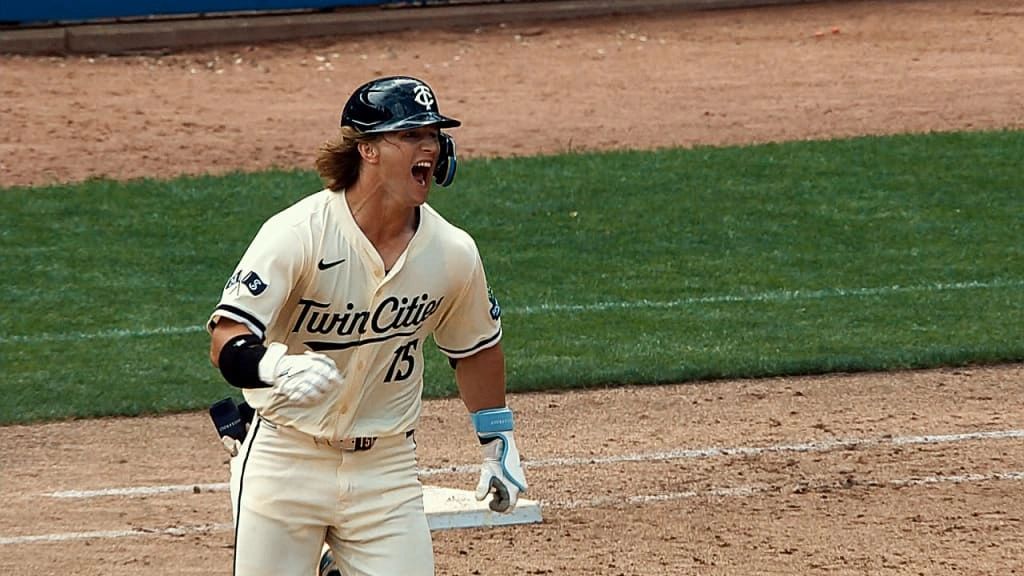
The second base pool features 5 decent prospects. The best is, no doubt, Minnesota’s Luke Keaschall. In just 207 PAs, Keaschall amassed 1.6 WAR, which is the most for an MMDBL free agent whose primary position is second. Keaschall’s slash was potent, at .302/.382/.445/.827 with an ISO of .143 and a wRC+ of 133.6. Keaschall’s was a tad injured in 2025, so that could be an issue, and his glove was below average. However, his walk rates carried over from the minors and he looks like a right-handed version of Brendan Donovan with more speed and less glove. Keaschall graduated as a hit- and speed-forward prospect with a 50 grade, projecting to slight power and below average fielding.
Kristian Campbell graduated to the majors last summer as a 60-grade prospect with a power and speed profile expected produce middle-of-the-pack batting average results and below-average glove work. Campbell started his rookie campaign strong but tailed off, eventually got hurt and was shut down after posting negative WAR on a slash line of .223/.319/.345/.664. His replacement was Marcelo Mayer, who also got hurt and was shut down, but not until he posted 0.4 WAR on a slash of .228/.272/.402/.675. Most of Mayer’s WAR was built on defense, and he profiles as a field- and power-first prospect with limited speed and a 30/40 hit tool. Mayer is expected to be moved to third where his power and arm strength will fit be a better fit for the role, and he graduated as a 55-grade prospect behind Campbell. Mayer had 136 PA and Campbell finished with 263 PA, so both will likely face limitations to ride along with their ineffectiveness.
Cole Young is a 50-grade prospect who will likely be given a chance to anchor the keystone in 2026 for the Mariners; and his profile is balanced with plus hitting, glove work, and speed complimented by power that might be average over time. You can forget Young’s 2025 production, but he’s a promising future pick with high walk rates and low whiff rates. Hyeseong Kim was a big international signing for the Dodgers last offseason, however, his role on the World Series team’s run was de minimis as he amassed a mere 170 PAs in 71 games. He was effective when he played, slashing .280/.314/.385/.699 with average defense enroute to 0.8 WAR. His role should enlarge in 2026 as he’s currently penciled in as the starting second baseman for the Dodgers’ three-peat campaign. Max Muncy is also a prospect worth watching. No, not the Dodgers’ 35-year-old third baseman, but the A’s 22-year-old prospect. The A’s Muncy didn’t provide a Dynasty-useful season last summer despite 220 PAs over 63 games. However, with Zach Gelof finally healthy and ready to resume second base duties for the A’s, Muncy is slated to be moved to third in 2026. Muncy graduated as a 40+ prospect with above average speed, field and power. His hit tool is a concern, though his glove should play up as he moves out of the shortstop position he played throughout the minors.
A Bevvy of Youngsters at Third Base
The hot corner is one of those positions that is experiencing a period of renewal. The 2025 season introduced 4 legitimate prospects who earned full-time reps and finished with 1.4 WAR or greater. Three more part-time prospects posted 0.4 to 0.8 WAR, and there were three prospects that had 2025 debuts to forget but which figure into potentially prominent roles entering the 2026 season.
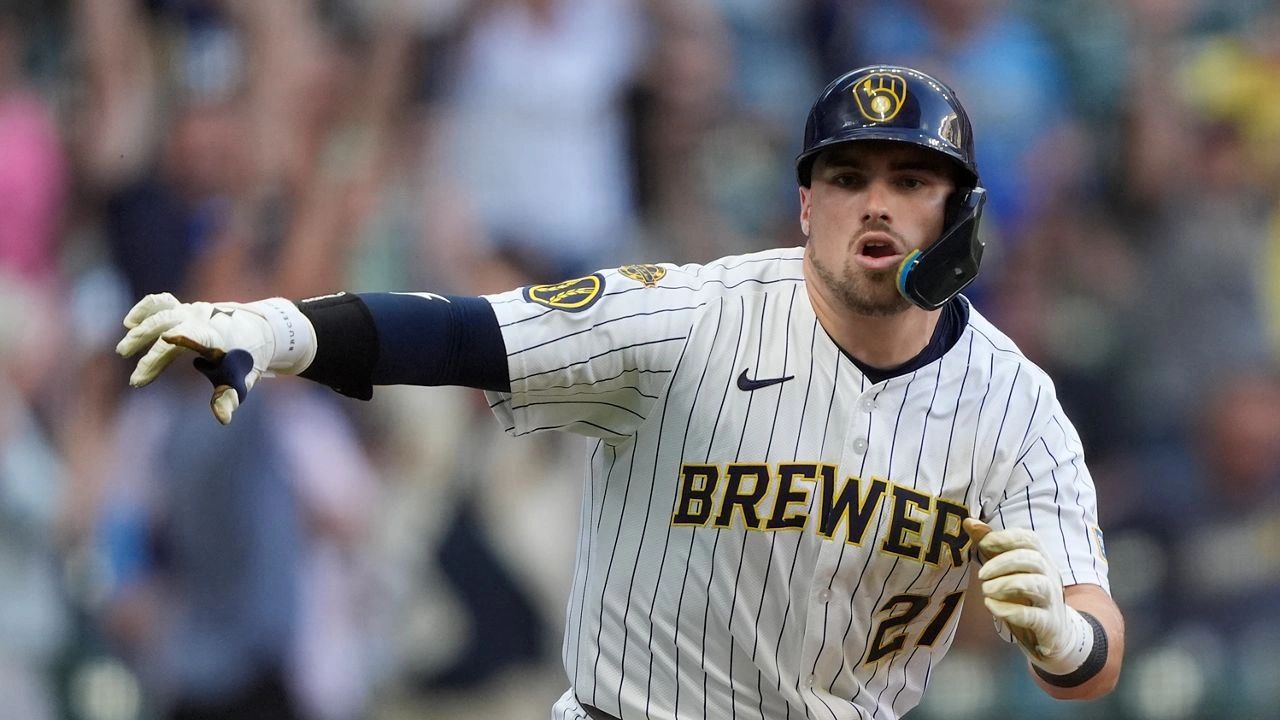
Caleb Durbin leads this group with 2.6 WAR. The righty slashed .256/.334/.387/.721, belted 11 homers, swiped 18 bases and played excellent defense with +5 DRS. His splits were spot-on even, so if you want a defense-forward third bagger with some pop and speed who’ll give you .720 OPS both ways, Durbin is your stalwart. A somewhat under-the-radar prospect, Durbin carried a 40-grade through the Yankees organization but was the steal of the Devin Williams trade. His top tools are hitting (60) and speed (60), suggesting it is possible that he develops into Sal Frelick 2.0 for the Brewers. The plucky third baseman also seems to have the clutch gene as he delivered many key hits for the Crew and slashed .352/.393/.463/.856, the 10th best average in the majors last summer in high-leverage situations.
Talk about a grindy group – who wouldn’t want an Addison Barger on their 25-man? The world was introduced to the 25-year-old lefty in the playoffs, mostly due to his clutch hitting and strong play in rightfield. Barger is a power-first prospect who played 91 games at third with a +1 DRS. He graduated as a 45-grade prospect with upside in the power department and above-average speed, though his hit tool and glove carry average to below-average projections. Barger is also a candidate to play the strongside of a platoon given his minor-league track record.
Matt Shaw posted 1.4 WAR for the Cubs but his upside is massive. He’s reminiscent of Troy Glaus, who popped 320 homers and posted 34.4 WAR over 13 MLB seasons. Both are power-first righties with decent gloves. Shaw is a 55-grade prospect who had a Glausian rookie season -- .226/.295/.394/.689 with 13 homers and +12 DRS. Fangraphs is projecting Shaw to more than double his WAR to 2.9 in 2026, though the Cubs seem to (needlessly) be in on Alex Bregman this off-season.
Miguel Vargas produced a nice season for the White Sox, graduating as a 50-grade 5th year senior who profiles as an above-average hitter with average tools elsewhere. The righty produced 1.4 WAR while slashing .234/.316/.401/.717 with 16 homers, and Fangraphs’ projections have him notching up the offensive output in 2026 for a 2.1 WAR season. Ronny Mauricio had a 0.7 WAR first season for the Mets, but he’s on a club that will probably spend money to reduce his plate appearances, and he’s currently slotted in as a DH and reserve role. The Mariners will likely hand the starting hot corner job to Ben Williamson this Spring, assuming Eugenio Suarez flees in free agency. Williamson is a fringe prospect who carries a Gold Glove-caliber set of defensive tools. He also brings speed and could develop into a Matt Chapman-type, but that’s a stretch on his hit and power tools.
For those of you who still believe in prospect rankings – Editor’s Note: I do not – we offer Jordan Lawlar. Lawlar has been in the Top 10 of prospect rankings for Fangraphs, Baseball America and Baseball Reference for three years. The Diamondbacks’ prospect carries a 55-grade with plus tools everywhere except his ability to hit for average. His top tools are 60 defense, 60 power and 70 speed, but his MLB showing so far hasn’t come close to substantiating these grades. He’s a AAA rockstar, though, and the D-Backs feel as though his injuries are in the past and that he’s ready to be the everyday third baseman. Fangraphs likes Lawlar so much that they have him going from -0.5 WAR in 2025 to 1.8 WAR in 2026. The last third base prospect worthy of ink is Brady House, a righty who appears poised to take over starting duties this spring for the Nationals. House touts a 45 grade and his calling card is glovesmanship, a strong arm, and a power bat. Hitting for average and contact rate, however, could be problems and he hasn’t yet developed a high enough walk rate to fit the profile of a power corner mainstay.
Short on Shortstops
If you’re entering the MMDBL Annual Rookie & Free Agent Draft in need of a starting shortstop, for now and the future, you’ll be scraping. We have the Javy Baez bounce back year, the Chase Meidroth rookie campaign (by a future second baseman), and the glove-only campaigns of Nick Allen and Taylor Walls.
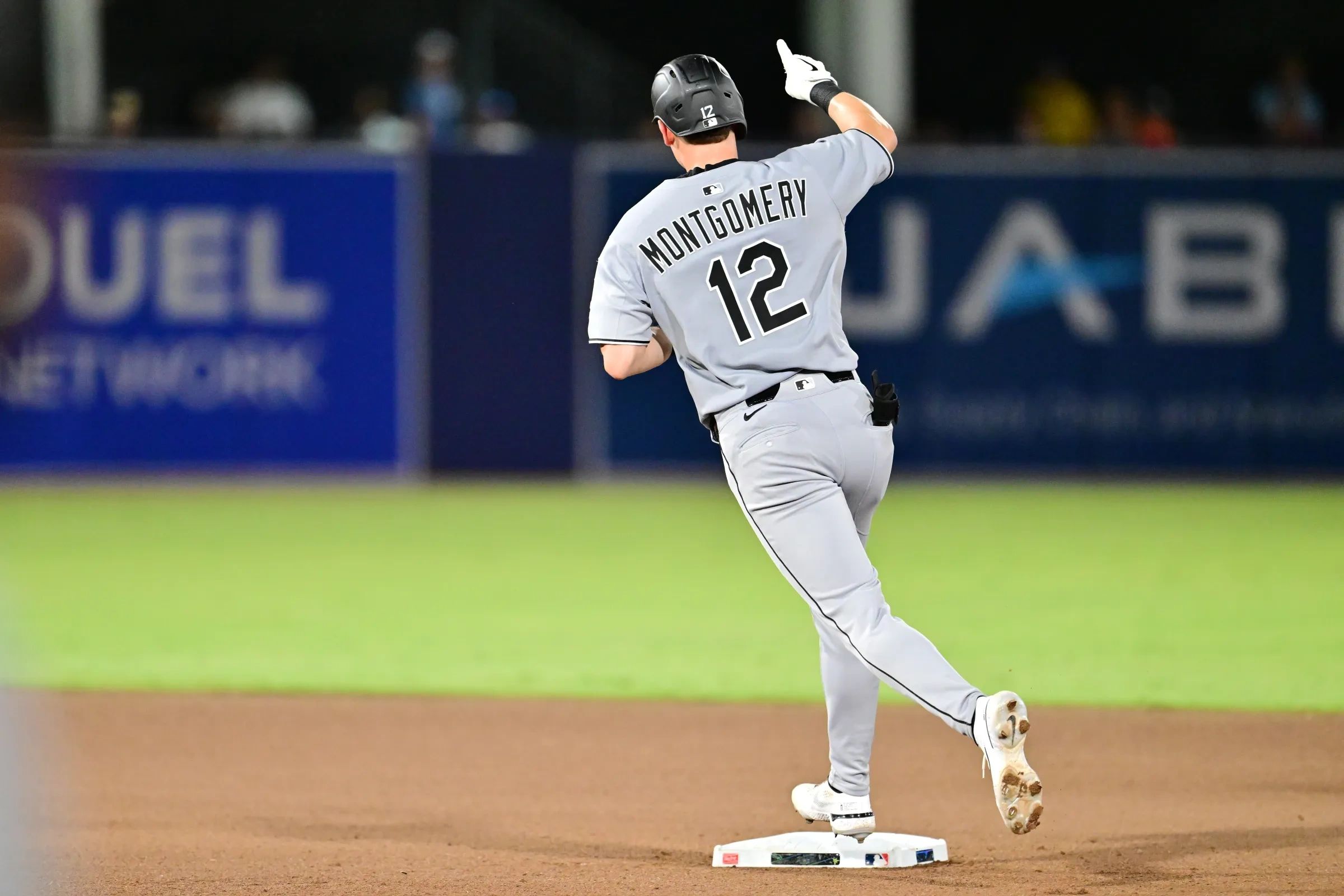
Then there’s Colson Montgomery, the White Sox likely shortstop of the future (until Caleb Bonemer comes along) who bumped Meidroth to his rightful home at second base. Montgomery graduated to the majors as a 45-grade prospect and showed why the White Sox like him. In the minors he displayed the type of power that, once matures, is capable of 25-30 homers annually. He also posted gaudy walk rates. On the other side of the ledger, the lefty’s defense is pedestrian and he lacks foot speed – plus his swing mechanics don’t portend quality batting averages. In his debut, however, he showed power, patience and his defense was better than advertised as he slashed .239/.311/.529/.839 with 21 homers in just 284 PAs and notched a +7 DRS at short enroute to 2.7 WAR. The knock on him defensively is that he’ll outgrow the position – he’s already 6’3” and 230 lbs – and will have to move to a corner. The most likely move (when Bonemer is ready) is third base where he posted a +1 DRS. Montgomery feels like a prospect who will be better than scouts pegged him on his way up the ladder.
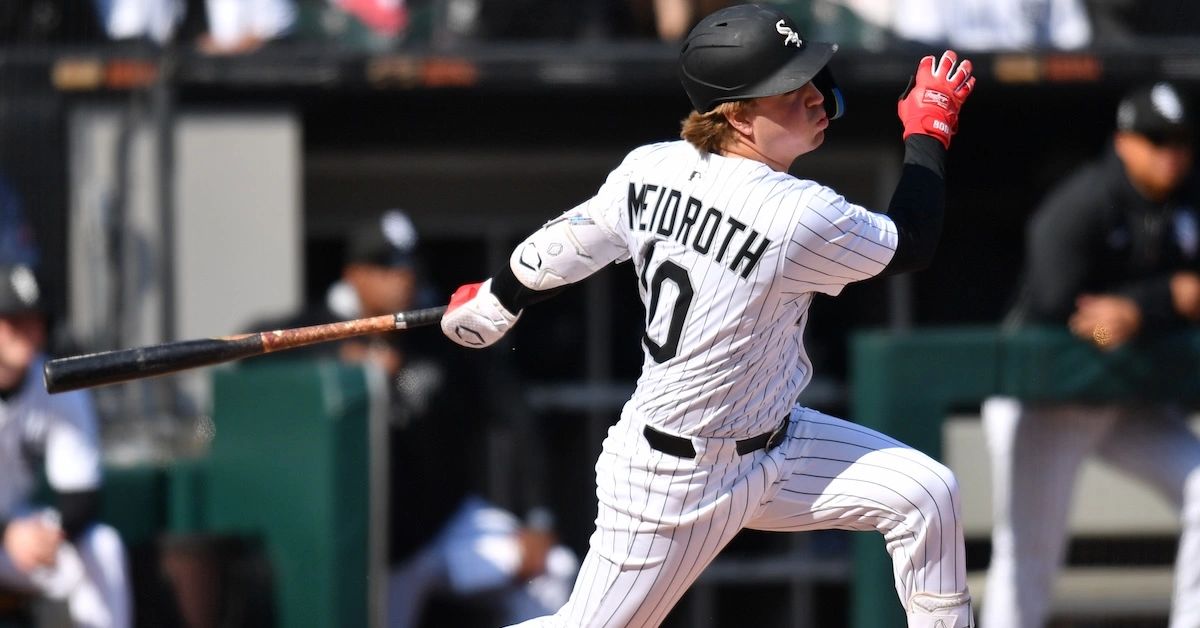
Chase Meidroth played more at short than any other position last season, but when Montgomery reached the majors, Miedroth switched to second base and looks like he’ll be a mainstay there. Meidroth finished with 1.3 WAR while slashing .253/.329/.320./.649. He was -1 DRS at second, and -2 DRS at short. Graduating as a 45-grade prospect, his carrying tools are elite contact and gap power. He projects to below-average raw power and middling defense, which can be hidden at second. He was pegged as a 40 runner but then swiped 18 bags and exuded a serious grindy vibe in his MLB debut
Javy Baez might be the most flawed superstar ever, but when he’s good he’s oh so exciting. If only Dynasty gave ratings for applying the tag and sliding to avoid the tag. Baez is 33 now but he had a renaissance last season in Detroit that began with him playing next-level centerfield. He wound up with +2 DRS in center, +1 at third and -1 at short, so he’ll provide good defense in multiple spots. All the talk about how Javy remade his approach at the plate was overblown. He posted his lowest walk rate ever (2.3%) and continued to strike out at a rate above league average and finished with a slash of .257/.282/.398/.680 with only 12 homers. At this point, he’s become the aging vet we cheer for out of nostalgia. Why isn’t Javy what Javy used to be? The prodigious power is gone, which means all those pitches out of the zone that he reaches don’t shoot 115 mph into the corner; instead, they rollover to the infield or become line drive outs to the left side.
A deep prospect in this January’s draft is Carson Williams. The 22-year-old didn’t fare well in his cup of coffee last fall but continues to show huge upside. A 55-grade prospect, Williams leads with a 70 glove, 55 power, and 55 speed. What pulls the profile down is the expectation that Williams won’t hit for much average and has a hole in his swing that might harm the translation of his high minor-league walk rates to the majors. This is not a death knell for a glove-first middle-infield prospect – in fact, many guys have leveraged this profile into high-WAR careers. It will come down to how Williams adjusts as he gets his opportunity, which could come this season as his only roadblock is the slick-gloved Taylor Walls who just re-upped for 2 years with the Rays. Walls is also in the draft, as is Nick Allen, and both carry a platinum glove and a plastic bat. Walls posted a .599 OPS, and Allen a .535 OPS. Allen is a true glove-only depth piece, but it wasn’t supposed to be this way for Walls who showcased solid contact skills and high walk rates in the minors but has only hit .195 in 1,560 PAs in the majors.
Prospects in the Outfield
We’re going to talk about 25 guys in this segment, so we’re going to have to talk fast. When you drop 251 words on the demise of Luis Urias and finally grind that axe you’ve been meaning to, it leaves less time to discuss 19 prospects and 6 vets that should find their way onto rosters at January’s draft.
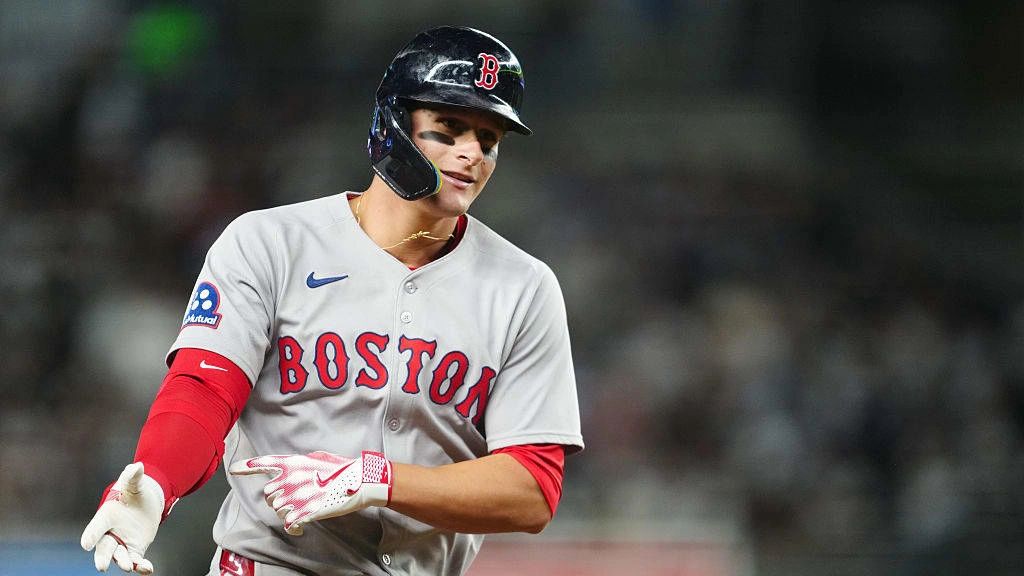
It starts with Roman Anthony, Boston’s 21-year-old phenom who graduated as a 60-grade prospect with 80-grade light-tower power, plus speed, plus fielding and average hit tool. Anthony was the top prospect in baseball when he made his debut last spring, and he didn’t disappoint. He looks like a perennial all-star and challenger for MVPs with Kurtz as soon as Judge falls off. Everything translated to the majors – the power, the speed, the high walk rates, and the modestly concerning contact issues. Even the defense was suitable. Anthony slashed .292/.396/.463/.859 while posting a 13.2% walk rate, .171 ISO, and a 140 wRC+ enroute to 2.7 WAR. The Brewers just stupidly traded Isaac Collins for not much this winter after he earned 2.6 WAR during his debut season. True, Collins was always a fringe prospect with no clear carrying tool, but sometimes you have to take growth on its face value. Collins is a switch-hitter who slashed .263/.368/.411/.779 with 9 homers and 16 steals. His 122 wRC+, .148 ISO, and respectable OPS splits (.732 vs LHP, .802 vs RHP) portend an everyday starting side-fielder outlook. Perhaps the Brewers were concerned that the profile is redundant, so they do what? Sign Akil Baddoo and get Angel Zerpa for Collins? At least make a good trade for godsake. Welcome to KC, Isaac.
Miami may have found something in Jakob Marsee. The lefty was solid, slashing .292/.363/.478/.842 with a .187 ISO and 133 wRC+ enroute to 2.1 WAR. In a position (centerfield) that demands strong offensive output, topline speed, and defensive leadership, Marsee’s “fit” is hard to place. He’s more of a contact-and-walk hitter with below-average strikeouts, above-average speed, and a modest arm. Ok, that was his profile while climbing the ranks as a middling prospect. But, like Collins, look what he does, not what everyone thinks he should do. If Jordan Lawlar is the heralded prospect who never delivers, Marsee is the unheralded prospect who finds a way to make his profile excel at every level. Some might say, “he’s a gamer” but that’s not reflected in the prospect grading scale. Envision a first-division team contending for the World Series and you probably don’t have a Collins or Marsee on the field every day. Fine, I’ll take a second-division regular with no glaring weaknesses in his game and find a way.
Daylen Lile posted a 1.4 WAR season and assembled a nice slash of .299/.347/.498/.845 with a .199 ISO and 133 wRC+. Among Collins and Marsee and Lile, it is Lile who probably has the highest upside because of his hit tool and speed combined with decent power expectations. Lile could use a few more walks in his profile; and before you question his .336 BABIP, notice that he cultivated this trait throughout the minors, peppering high-velocity grounders through the left side and spraying line drives to both sides. The profile works, and the BABIP-inspired batting average holds up, as long as his contact quality remains high. His MLB debut suggests that it just might. His glove was below average in 2025, and that could lead the Nats to stuff him in a rotation that involves first, DH and side-field duties, though they have him pegged for leftfield and batting 3rd.
Outside of Anthony, the two best long-term prospects of this group might be Cam Smith and Jac Caglianone, though neither distinguished themselves on the field last season. Smith won the day with the heartfelt “you made the club” announcement in which the Astros surprised him with his parents in the clubhouse when he was informed, but he then struggled to a defense-driven 1.0 WAR, posting a 90 wRC+. He may be given a side-field to own again this summer and he’s only 22. Smith is a 50-grade prospect with 70 power and 55 fielding who had only 268 minor-league PAs before being handed the rightfield role last spring. He posted +12 DRS and displayed a cannon of an arm. Caglianone will start in right for the Royals in 2026 and his game is all about power. The 6th overall pick in the 2024 June Amateur Draft, Caglianone grades out with 80 power, good enough fielding, and questions about his batting average potential. Unlike most total power prospects, however, Caglianone doesn’t come with the usual contact rate issues. He closes on the zone pretty well and exhibits strong plate patience. And while he hit only .157 in his 2025 MLB debut, he batted .337 with a 1.025 OPS across 304 AA and AAA PAs last summer. He has one plus tool – power – but that pop is so prodigious (80 grade) that it has carried him to a 55 grade, which is the second best in this outfield graduating class.
There’s a centerfield prospect who is so fast (70 grade) and so good with his routes and fielding (70 grade) that it elevates his defense-first profile into the category of a legitimate prospect. The A’s Denzel Clarke will start in center for the A’s next summer, he will bat last, he will whiff a ton, and he’ll pop a few homers and steal a ton of bases. Will he hit? Shakes the Magic 8 Ball and looks: “Outlook not so good.” But will he get on base? “Reply Hazy, try again.” He exhibited double-digit walk rates in the minors which produced top-of-the-order OBP, but he walked just 3.8% of the time in his MLB debut. The poor contact also muted his plus power potential. The Marlins’ Heriberto Hernandez is a divisive prospect. To some, he’s not a prospect at all. I think he gets sold short, especially for a guy with double-digit walk rates who can run, field and hit homers. He has a hole in his swing, but so do 75% of major-leaguers, and in 2025 he managed that hole to slash .266/.347/.438/.784 while hitting 10 homers in 294 PAs with a 118 wRC+ enroute to 1.3 WAR. His defense was significantly negative in 2025 but it should get better.
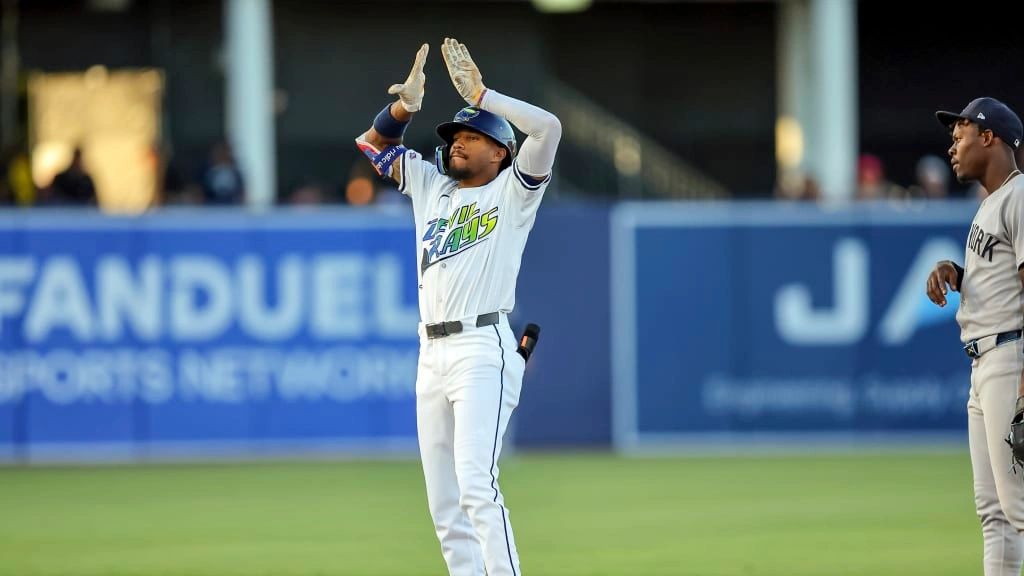
Chandler Simpson stole a ton of bases for the Rays in his debut season – 44 to be exact – which is 44 more bases stolen than homers hit. That’s right, Simpson had no dingers and he doesn’t exactly walk a lot (4.5% rate in the MLB, 5.8% in AAA), though he rarely strikes out (9.8% in 2025) and generates a consistently high BABIP, which is bound to occur when you mix balls in play with lightning speed. He has the potential to play good defense, though he was inconsistent in his MLB debut. Simpson hits from the left and uses the extra step to first to his advantage. The power game won’t develop – the dude had 1 homer in his minor-league career! But he had 231 stolen bases, including 104 in 2024, over a span of 266 games. If you’re getting Juan Pierre vibes so am I. I’m a Juan Pierre apologist. Sabermetrics hated that guy, yet he amassed 24 WAR and slashed .295/.343/.363/.706 across 14 MLB seasons. He hit 18 homers and stole 614 bases in 1,994 games. The data science nerds, however, point to his career 0.66 ISO and 86 wRC+ and quickly dismiss him. Simpson would love to have Pierre’s career.
Baltimore’s Dylan Beavers is slated to start in right next summer but that could change as the Orioles continue to make trades and spend money. If you like walks, you’ll like Beavers. If walks were a standalone tool, he’d be an 80-grade walker. How else do you bat .227 and post a .375 OBP? A 45-grade prospect, he’s average across the board in all categories though the hit tool could develop. Cleveland’s CJ Kayfus is a hitting prospect who is slotted in at DH for the Guardians next summer. This is a bit surprising since he’s a 45-grade prospect who’s best tool is fielding (55 grade). He has the potential to be an above-average hitter with middling power. He had double-digit walk rates in the minors but that didn’t fully translate to the majors in his small-sample debut. Meanwhile, his .195 ISO and 96 wRC+ are reasonably solid. He’ll have to control the zone better and whiff less to emerge. Drew Gilbert also was given a small sample size last summer and the results were not good. However, there’s a lot to like about the 25-year-old lefty. For instance, his tools are all average to slightly above average. He’s a 45-grade prospect who walks more than average, whiffs well less than average, and is capable of league-average pop for an outfielder. He’s a better defensive centerfielder than Jung Hoo Lee – in fact, better defensively than all the Giants’ outfielders – so his path onto the field might be for the Giants to bump Luis Matos to the 4th outfielder role and slide Lee to right so Gilbert can patrol center.
The Cubs’ Owen Cassie, Astros’ Jacob Melton, and Rangers’ Alejandro Osuna are decent prospects. None are penciled into starting roles for their respective clubs as we sit here in mid-December, but that could change. Cassie is a power-first 45-grade prospect, Melton also carries a 45 grade with less reliance on power, and Osuna grades out at 40 with average tools. For this trio, the key will be opportunity. If I was forced to pick one, it’d probably be Cassie on the premise that his on-base skillset will buy time for development, though he’ll have to improve his putrid 3.7% walk rate and 40.7% whiff rate to get a real shot. Other prospects in the outfield pool include Miami’s Victor Mesa Jr., the A’s Colby Thomas, the Angels’ Matthew Lugo, and Washington’s Robert Hassell III. In the game of “pick one” I’ll go with Hassell III based on his speed and defense and because I’m intrigued by post-hype prospects (Hassell III and James Wood were the centerpieces of the Soto trade).
There are 6 veterans who should provide nice cards for competing teams. Tampa Bay’s Jake Mangum posted 1.8 WAR (.296/.330/.368/.698), Toronto’s Miles Straw also generated 1.8 WAR (.262/.313/.367/.680), and Dominic Canzone put up 1.5 WAR (.300/.358/.481/.840). Mangum is a plus defender in center and the sides, and Straw posted a remarkable +15 DRS in center. Yet only Canzone is currently penciled in as a starter for 2026. Detroit’s Jahmai Jones is a lefty killer, and Texas’ Michael Helman and Sam Haggerty will battle each other for playing time off the bench next summer.