
World Series – Red Sox Outlast The Opener With The Closer
In retrospect, it seemed like two teams on a crash course. The team that scored the most runs in the regular season versus the team that allowed the fewest. It felt like a battle of ideologies that was destined to happen – the high-powered Boston Red Sox lineup versus the stingy Philadelphia Phillies pitching staff built around The Opener modus operandi.
The Red Sox are the new World Series champions in the Metro-Milwaukee Dynasty Baseball League (MMDBL), outlasting the Phillies in an undulating and moody series that took 6 games, saw both teams on the brink of disaster, and featured many plot twists and turns. The Opener worked. Almost to perfection, throttling the Red Sox offense. But it was The Closer – Kirby Yates – that made the difference in the series and played the biggest role in Boston’s ultimate victory.
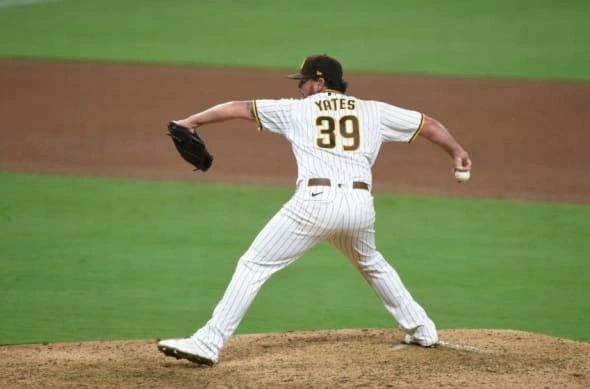
Yates claimed the Series’ MVP, posting a scoreless line of 2 hits and a walk scattered over 7 2/3rd innings, while striking out 13. Yates accounted for 14.5% of the innings pitched by Boston in the series and, notably, he thwarted a pair of potential game-changing threats (Games 2 and 6) while holding the Phillies scoreless in a scintillating Game 3 extra-innings win.
Closing Time Comes Early
Yates was officially 1-0 with no saves, but he should have been credited with a win in Game 2. Instead, a poor scoring decision credited Ryne Harper with the Game 2 win even though Harper allowed the only 2 batters he faced to reach base. In that game, Yates entered in the top of the 4th with 2 outs and the go-ahead run on 2nd after the Red Sox saw a 3-0 lead shrink to 3-2 and the ever-dangerous Jose Altuve coming to the plate. Yates ended the threat and went on to yield a mere hit over 2 2/3rd while fanning 6.
In Game 6, Yates again shut the door as he entered early to end a building threat. Leading 3-0, Boston starter Jose Berrios lost his stuff in the top of the 6th. Cam Bedrosian was ineffective in relief. Eventually, with bases loaded and 2 outs, Yates was summoned to end the threat, striking out Ryan Cordell. Yates went on to pitch 3 innings, yielding a hit and a walk while striking out 3. Due to fatigue, he left the last out of the game – the last of the series and season – for Ryan Pressly. It was unfortunate for Yates because he’d have preferred to be on the field for the final-out dogpile, which happened after Pressly coaxed Altuve to hit into a fielder’s choice groundout.
Yates’ other outing was a perfect 4-strikeout, 2-inning effort to close out an improbable Game 3, come-from-behind win. Boston entered the top of the 9th trailing 3-0. The Phillies turned to Tony Gonsolin, and the Red Sox plucked Mark Canha off the pines to open the inning. Canha responded with a single and moved up to second on a Justin Turner base hit. The Phillies called on Clayton Kershaw to restore order, which he did, whiffing Stephen Vogt and getting Niko Goodrum to flyout. With 2 outs and 2 on, the Phillies brought in right-hander Daniel Mengden to face Howie Kendrick. Instead of Kendrick, Boston sent Shohei Ohtani to the plate for a lefty-right matchup. Ohtani was intentionally walked and Mengden was relieved in favor of Jarlin Garcia – a lefty brought in to face a lefty, Charlie Blackmon.
By this time, Yates was up and ready in the pen in case he was needed. Blackmon, the BoSox best hitter in the series, delivered with a bases-clearing double to right to tie the game, 3-3. Yates would work his scoreless magic and Vogt would give Boston a 4-3 lead with a run-scoring double in the 10th. The improbable win gave the Red Sox a 3-0 series lead and it looked like the Phillies were done. They weren’t.
The Opener Strikes Back
The Phillies spent an entire season confounding opponents with The Opener strategy. The team stuck to its knitting in the World Series and throttled the Red Sox offense. In the regular season, Boston scored a record 348 runs, an average of 6.4 per game. The team clubbed 87 homers and set records for all 4 slashline categories -- .290 batting average, .369 on-base percentage (OBP), .502 slugging percentage (SLG), and .871 on-base plus slugging (OPS). While Boston was bashing its way to a Bull Durham pennant, the Phillies were pitching their way to The Natural’s pennant, yielding a league low 193 runs and 49 homers.
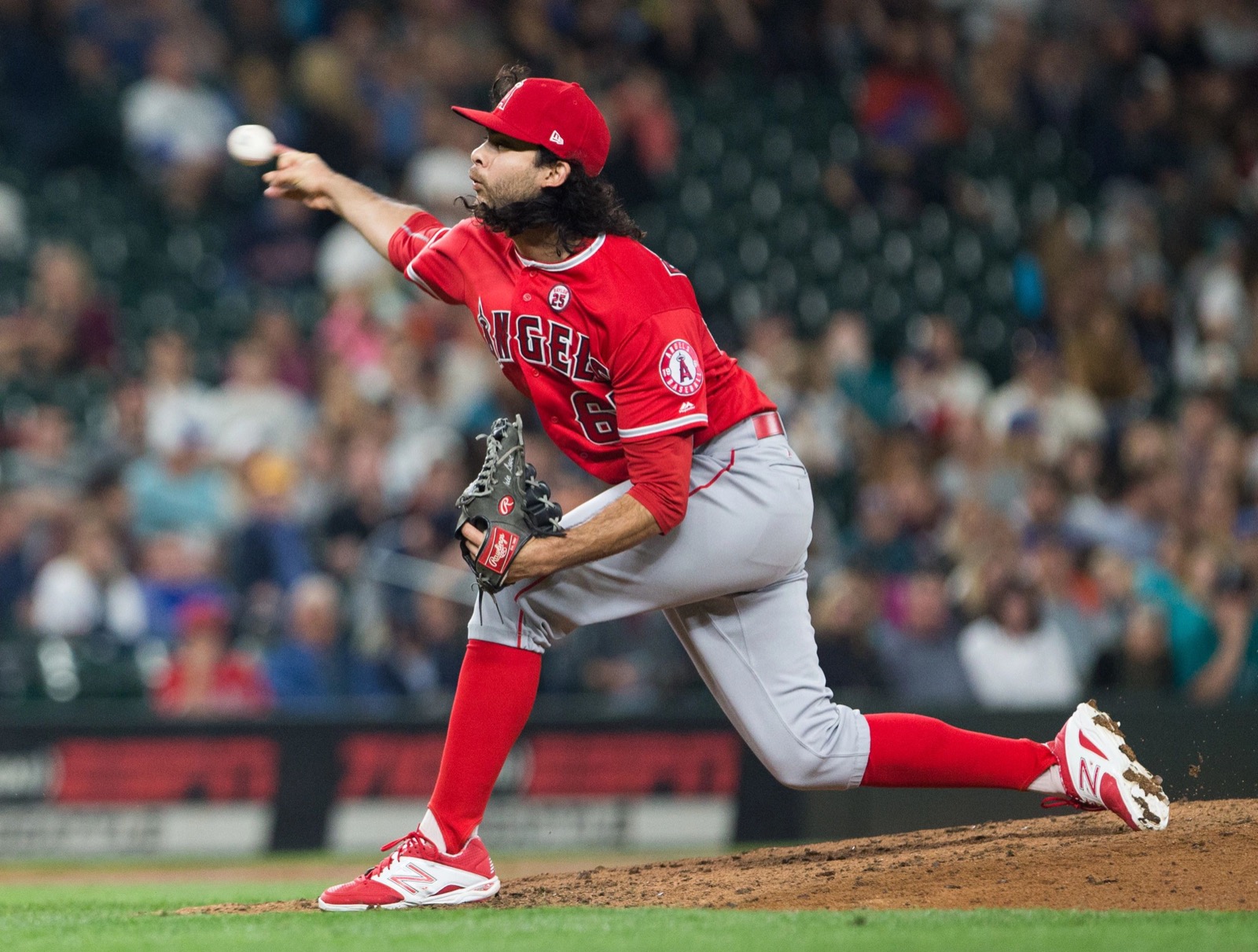
In the World Series, Boston was held to a .239 batting average and a paltry .365 SLG. They still mustered a .375 OBP, resulting in a .730 OPS, which was padded by several intentional walks as the Phillies skipped bad matchups in favor of good ones. Philadelphia generally kept the Red Sox from cashing in with big hits, yielding only 4 homers and 15 extra-base hits in 6 games. Philadelphia navigated a 1.63 WHIP to manage a respectable 3.81 ERA.
Defense was an issue for the Phillies. Notably a team with excellent range in the outfield and steady defense on the infield, Philadelphia committed 7 errors in the series for a .968 fielding percentage, which would have ranked dead last in the regular season. Defense might have cost the Phillies Game 2. Game 1 got away early as the Red Sox posted a 7-spot on Zach Britton in the 3rd inning and never looked back. But in Game 2, 4 Phillies’ errors played a big role in the Red Sox win.
The game started in auspicious fashion when Phillies’ starter Matt Shoemaker called for a trainer after throwing just one pitch. Shoemaker, later placed on the DL and lost for the series, was relieved by Tyler Clippard. Boston touched Clippard for a pair of unearned runs in the bottom of the 2nd, aided by a throwing error by SS Jorge Polanco. Boston never looked back from its 2-0 lead, later adding another unearned run – courtesy of another Polanco error – and rolled to a 6-2 win.
After the demoralizing and stunning Game 3 loss the Phillies used 9 pitchers to win Game 4 and keep hopes alive. In Game 4, no pitcher lasted more than 1 2/3rd and the only Boston run was, predictably, unearned. Philadelphia scattered 6 hits, 8 walks and 2 unearned runners and the Red Sox left 15 runners on bases, versus 4 for Philadelphia. A Brian Anderson 1-out run-scoring single in the bottom of the 7th inning gave Philadelphia a 1-0 lead it wouldn’t relinquish enroute to a 2-1 win.
The Phillies spared the drama in Game 5, jumping all over Jack Flaherty for 5 1st inning runs, keyed by a Brian Anderson grand slam. The result was never in doubt, thanks to Opener turned Starter Noe Ramirez who lasted 6 innings, yielding 2 runs on 7 hits and 4 walks while striking out 5. The Phillies would take Game 5 by a score of 6-2, tightening the choker around the Red Sox’ collective necks and forcing a Game 6.
We might be exalting the Phillies as the new champion if not for Zach Britton’s forgettable series. In just 4 2/3rdinnings, Britton alone was tagged with 12 of the 26 runs the Phillies yielded. He gave up 4 hits and 9 walks for a 2.79 WHIP and will be remembered for his 19.29 ERA. Had the Phillies won, a case could have been made for Brad Keller for MVP. Keller opened 2 games but pitched more like an ace, pitching 8 scoreless innings and holding Boston to a .179 batting average.
Blackmon’s MVP Bid
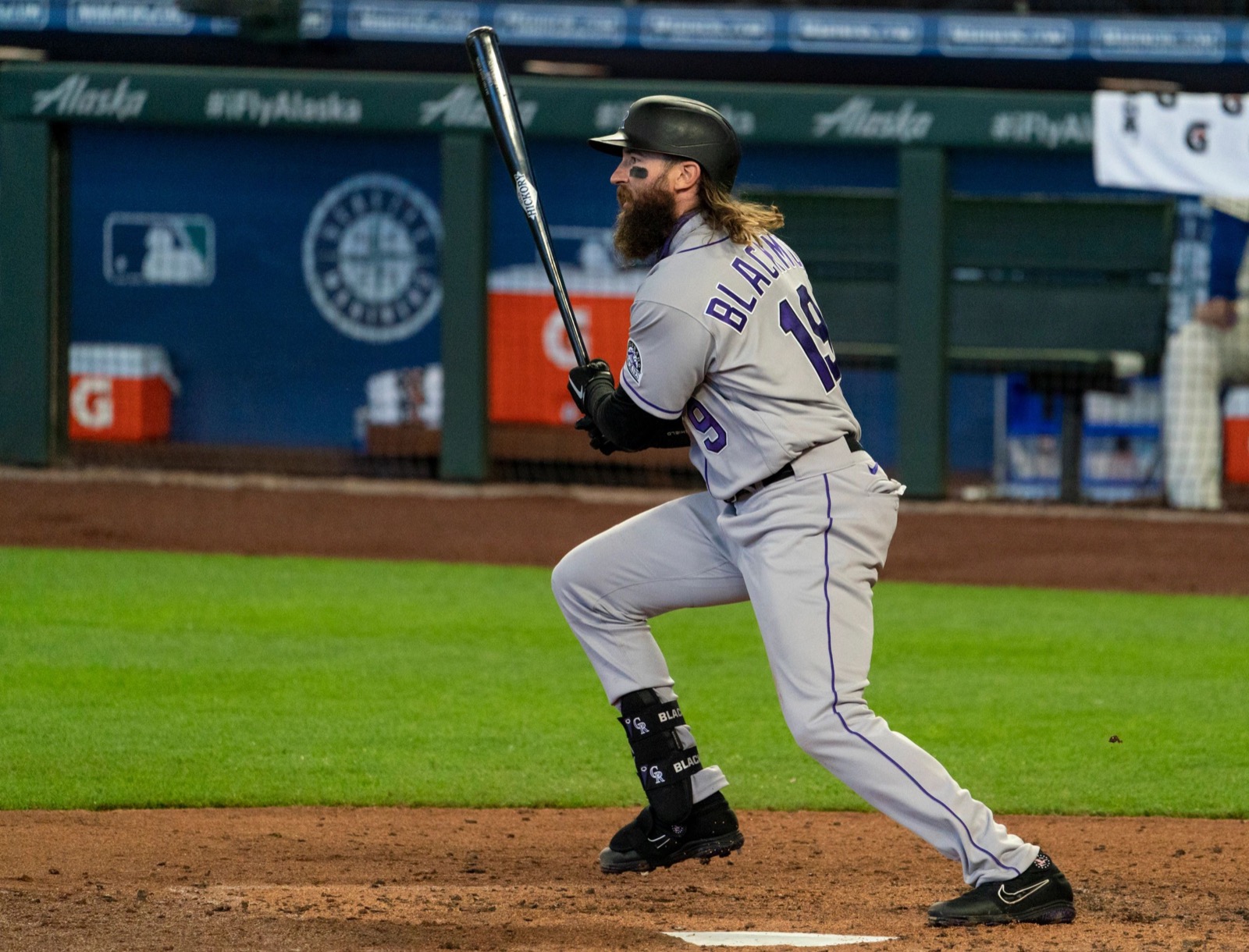
Game 6 went to the Red Sox 5-0. Blackmon opened and closed the scoring. The lefty poked a 2-run double in the bottom of the 3rd to give Boston a 2-0 lead. He then hit a 2-run, 2-out homer in the bottom of the 7th to extend Boston’s lead to 5-0. In the series, Blackmon had 4 of the team’s 15 extra-base hits and 1 of its mere 4 homers. He had 7 of the team’s 26 RBIs and slashed .280/.379/.520/.899. Most impressive, perhaps, is that 3 of Blackmon’s 4 extra-base hits and all 7 RBIs came off of lefties who entered just to face him. Blackman tied Game 3 with the bases-clearing double that made the win possible and he had all the key hits in Game 6, making a strong case for MVP.
So why Yates? The righty reliever earned the MVP trophy by leading an improbably stout run prevention effort. After struggling all season, Boston’s pitching staff yielded just 17 runs in 6 games and allowed a .197 batting average, 1.08 WHIP and 2.72 ERA. When you break it down, The Closer played the biggest role.
As the obvious axiom goes in sports, the winning team is the one that scores more than the other. While this is true, the winning team is also the one that allows the fewest runs. Sometimes it’s a matter of perspective and baseball existentialism: Did we score more runs, or hold them to fewer runs? All season, Boston overcame its imperfect pitching by bludgeoning opponents. In the World Series, Boston overcame its ineffectiveness versus The Opener by effectively shutting down rallies and preventing runs.
Yates was the key, and that’s why he claims the MVP, and why Boston prevailed in a hard-fought World Series.