
Dodgers are Champions Forged in a Cauldron of Title-Tested Teams
The 2025 Los Angeles Dodgers were supposed to be a good 51-win team that would grab the 3rd seed in the Natural League and fall shy of earning a bye. Instead, the Dodgers turned out to be a great 51-win team that would grab the 3rd seed in the Natural League and fall shy of earning the bye.
What made the 51-win, 3rd-seed Dodgers not just good, but great? A World Series championship, that’s what.
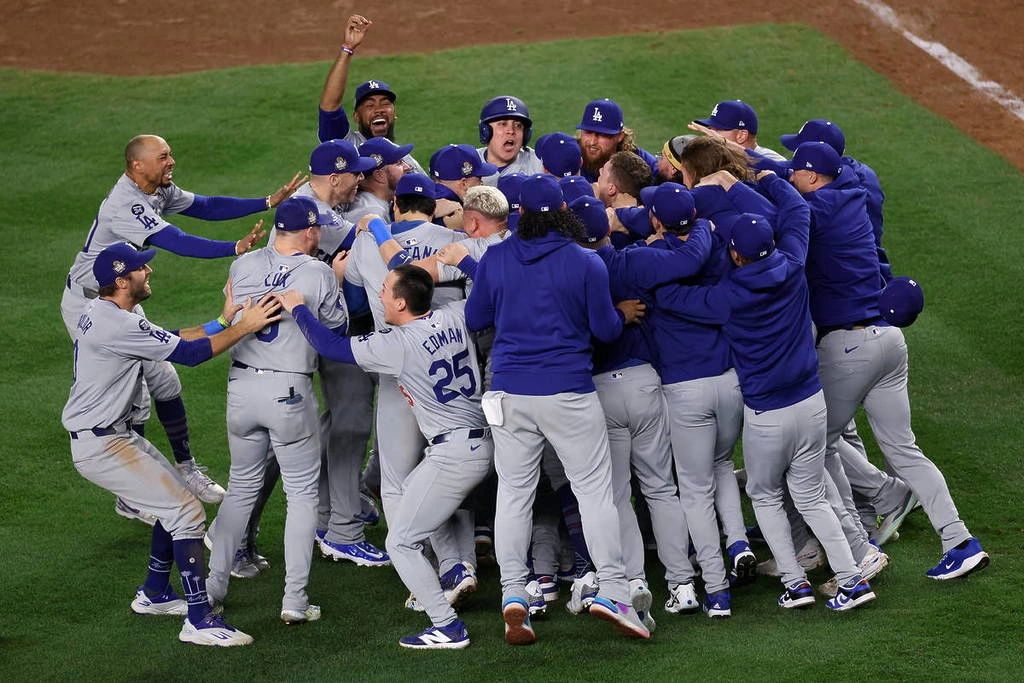
The Dodgers compiled a 67-44 record, going 16-5 in a dominant playoff run that included a season-ending 6-game winning streak against a pair of former champs (Philadelphia and Texas) and a 9-of-11 run to close out the title. The 16 post-season wins is a record – a testament to the gauntlet the non-bye Dodgers had to survive to win it all.
Preseason prognosticators got it right. They pegged the Dodgers as a 51-win team. They won 51 games. But they wrote them off from there, predicting a return to the World Series for the juggernaut Minnesota Twins, the only multi-trophy hoister in the MMDBL’s 7 seasons. Instead, it was the Dodgers who eliminated the Twins in 6 games in the League Divisional Series (LDS), the Phillies in the League Championship Series (LCS), and the Rangers in a World Series sweep.
En route to winning its first title, Los Angeles beat 3 teams collectively owning 4 of the MMDBL’s previous 6 titles. The Dodgers are a champion forged in a white-hot cauldron of title-tested franchises. They shoved through a No. 1 seed and a pair of No. 2 seeds, all who had the benefit of a bye, to claim the prize.
The Puzzle Pieces All Fit
So who are these guys and how did they do it?
The 2025 Dodgers are a puzzle you might buy at a thrift shop and then be surprised to find that the box contains every piece and that all the pieces are in good shape and fit together perfectly. Used puzzles are rarely this accommodating. But look at that! The 2025 Dodgers fit together perfectly!
The Dodgers were a puzzle, but not puzzling. And there’s a difference. A puzzle can be put together, over time, and with a plan. To be puzzling is to be difficult to solve, challenging to figure out.
The Dodgers were not built to outslug opponents. They weren’t a top hitting or scoring team in the regular season. They finished 8th in OPS, 16th in homers, and 14th in runs – out of the MMDBL’s 20 team. With runners in scoring position (RISP), they weren’t much more compelling – 16th in OPS and 9th in runs. Yet in the playoffs, they body-slammed opposing pitching staffs with regularity, slashing .294/.381/.438/.819, leading in average, OBP and OPS and finishing 2nd in Slugging (SLG). This led to a playoff-leading output of 5.90 runs per game.
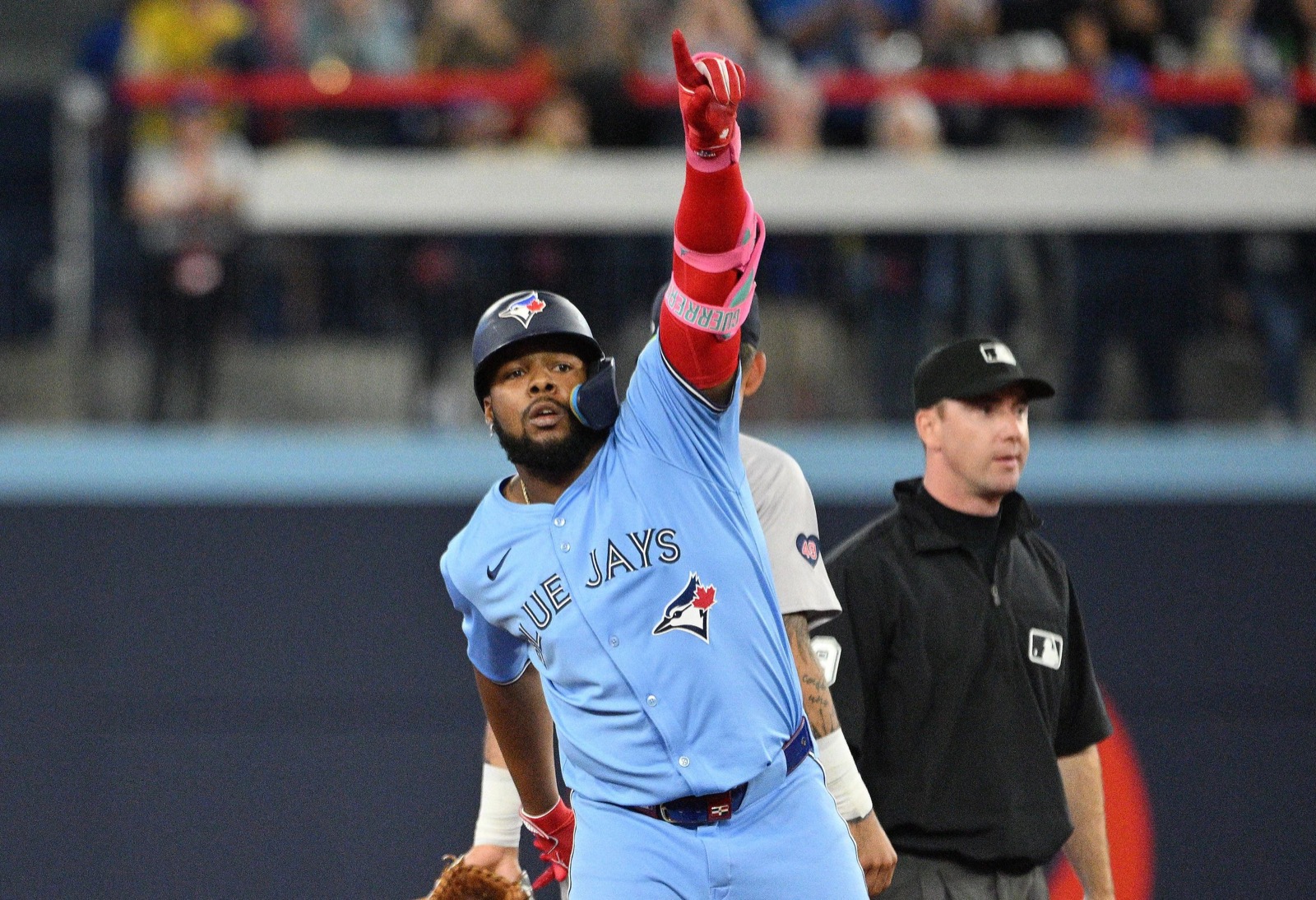
Was this hitting outburst surprising? In the context of “anyone can get hot at any time,” the answer would be “no”. This is fair especially when you consider that many of their stars underperformed expectations in the regular season. Kyle Schwarber slashed a moribund .194/.353/.341/.694 with only 8 homers in over 300 plate appearances. He hit 38 bombs and posted an OPS of .851 in real-life. Vladimir Guerrero Jr. popped just 10 homers in 416 plate-appearances while posting a sub-optimal .797 OPS. Comparatively, Vladdy crushed 30 homers with a .323 average and .940 OPS in the real MLB season. Though he was a part-timer, Matt Wallner was expected to rake after hitting 13 homers (32 pro-rated over a full MLB season) and notching an OPS of .895. Instead, he batted .152, posted a paltry .661 OPS, and was largely M-I-A in the regular season.
A clear-eyed analyst would not be wrong to look at these regular-season results and conclude that if Schwarber, Vladdy and Wallner do what they’re capable of doing – and if Jarren Duran, Jose Miranda, Jurickson Profar and James Wood do what they did in the regular season – then the Dodgers could get hot and their offense could carry them.
No Vladdy, No Problem
So why was LA’s offensive outburst so surprising? It starts with Vladdy – he was the Dodgers worst hitter in the playoffs, batting .218 with a .627 OPS and hitting zero (yes, zero) homeruns. Vlad was literally – not figuratively – the club’s worst hitter if you exclude Danny Jansen and his 1 at-bat, which was a strikeout. Teams don’t usually win the World Series when their best player is a non-factor.
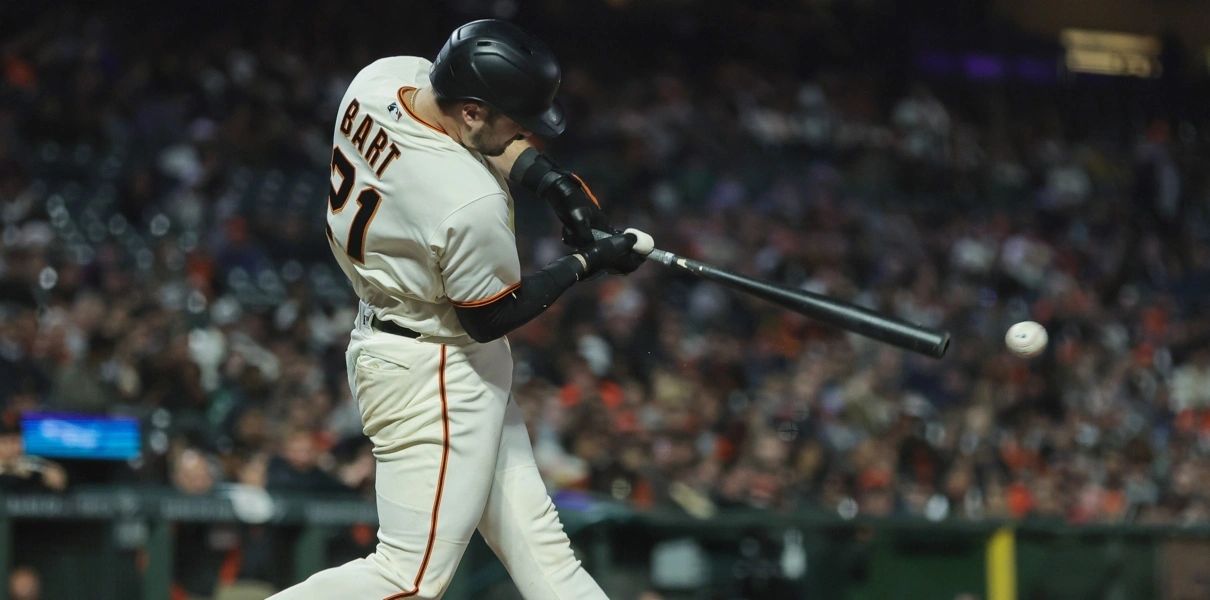
Then there’s the door prize that was playoff Joey Bart. Acquired in-season from the Giants, the catcher hit 6 homers and drove in 20 runs while slashing .303/.411/.566/.977. His performance was historically good, falling just a homer shy of tying the record set by Seattle’s Max Muncy in the 2024 playoffs when he hit 7 homers. And Bart’s 20 RBIs fell just 3 shy of the playoff record (23 by Mookie Betts, Seattle; and Corey Seager, Baltimore, in 2024).
Wallner awoke in the playoffs, slashing .353/.450/.676/1.126 with 2 homers in 37 plate appearances. Schwarber atoned for his regular season flop by hitting .296, getting on base 44% of the time and posting a "that's more like it" .849 OPS. Wood only hit .222 in the playoffs, but he reached base almost 40% of the time, hit 4 homers and slugged .556. Duran, the star that stir's LA's sunset martini, hit .333, reached base 40% of the time, had 12 extra-base hits including a pair of triples and homers, and stole 6 bases.
Perhaps you're hip the LA playoff theme -- lot's of baserunners, all day, every day.
The fact that the Dodgers offense went off was less surprising than the magnitude of the club’s offensive efficiency. Scoring 5.90 runs per game over a 21-game stretch in the regular season would be a notable accomplishment, but to do it in the playoffs against the best pitchers on title-tested teams can be qualified as shocking.
The 2025 Dodgers were not a team of streaks. In early May, the club won 6 in a row. A couple weeks later, it lost 3 in a row which, amazingly, was the team’s longest losing streak of the season. In the playoffs, they won 5 in a row, moving past Pittsburgh in the Wildcard Round, and then won their last 6 games to oust the Twins in the LCS and sweep the Rangers in the Series. Playing 111 games and never losing more than 3 in a row is a testament to the Dodgers’ makeup and fit – back to that puzzle analogy again. Every piece was there.
When the playoffs began, the consensus was that the Dodgers would need to rely on their pitching to carry them if they were going to find success. While the club’s hitting didn’t distinguish itself in the regular season, its pitching sure did. The team finished 3rd in WHIP and 3rd in runs allowed. The starting rotation generally set the table well, posting the 3rd-best WHIP, but it had its ups and downs. For instance, starters averaged only 15 outs (5.0 innings) per outing and yielded homers at a 2nd-worst 1.44 per 9 innings. Still, by minimizing traffic – Dodgers’ starters walked the fewest batters in the regular season – the club was able to get the best of its starters and get them out so the bullpen could take over.
And take over, it did. The Dodgers’ bullpen was 3rd in WHIP and ERA. Most importantly, it led the league in saves (32) and had the best success ratio, blowing saves just 7 times for an 82% success rate. Dodgers’ relievers shoved in the regular season as the group logged the 4th-most innings of any bullpen behind Philadelphia (of course), Baltimore (because the former champs’ rotation was lousy), and Seattle (the Mariners are showing reliever-ish tendencies these past couple seasons).
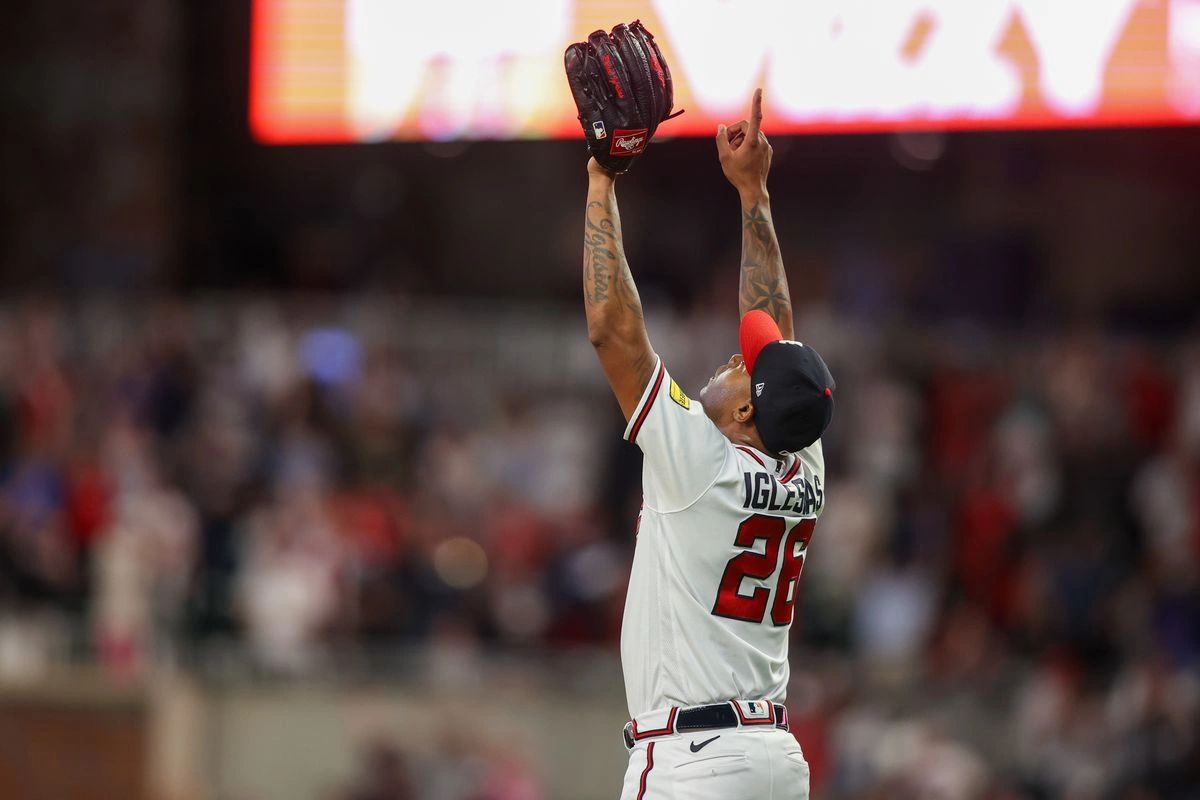
Closer Raisel Iglesias was 27-of-31 in save opportunities (87%) and led the league in saves by a wide margin while posting a 0.94 WHIP and yielding a 1.12 ERA. Iglesias was not touched for a single homer in 56 1/3rd innings of work. Iglesias led the MMDBL in saves a record 3rd time and his 27 saves is now the single-season record. Dennis Santana and Austin Voth were also lights out. Santana logged a .172 opponents’ batting average (OBA) and a 0.84 WHIP, yielding a 1.81 ERA in 59 2/3rds dominant innings. Voth notched a 0.96 WHIP in 43 2/3rds innings.
Trades Completed the Puzzle
The Dodgers’ pitching staff was assembled through a series of in-season trades. In May, the club added Aaron Nola in a deal with San Francisco, and later that month picked up Blake Treinen (along with Ryan Mountcastle) from the Orioles. Nearer to the trade deadline, the Dodgers again struck deals with the Giants and the Orioles. Right at the deadline, the club added A.J. Puk (and Nolan Gorman) from Baltimore. Days earlier, LA closed a massive trade in what might have been the watershed moment of its season when it acquired Jack Flaherty, Profar, Bart and Blake Perkins from the Giants.
This one trade provided the Dodgers its post-season MVP (Bart), another solid bat in Profar that gave the lineup length, and a Cy Young finalist in Flaherty. Flaherty finished the regular season 2nd in the MMDBL in wins (11), 2nd in strikeouts (179), 1st in Ks-per-9 (12.82), and 9th in ERA (3.44). For the Dodgers, Flaherty became the anchor of the staff, going 4-1 in 7 starts, yielding a .199 OBA and 2.89 ERA after being acquired. Flaherty gave up 17 homers in 125 2/3rds innings in the regular season, but his HR-allowed rate was 30% lower for the Dodgers than it was for the Giants as he gave up a homer-per-9 for LA in the regular season.
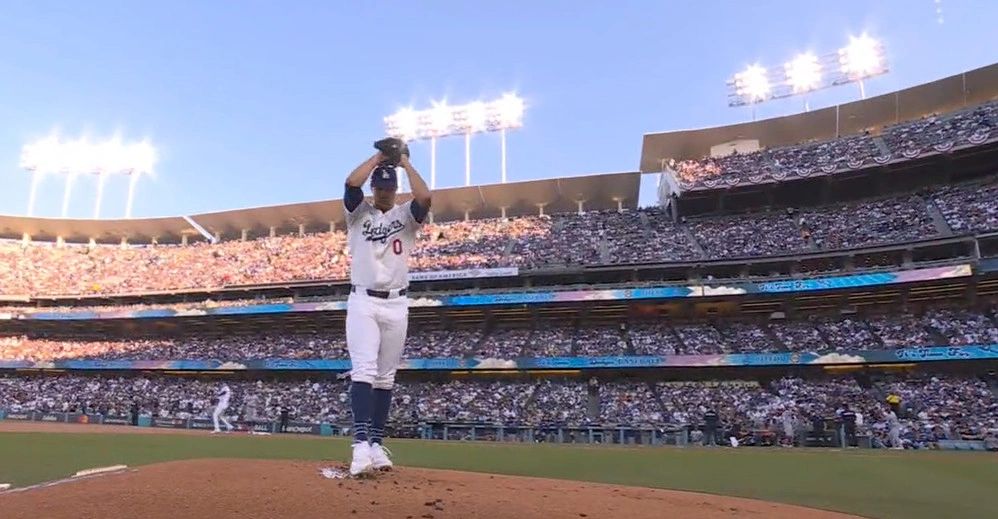
Flaherty started more games for the Dodgers in the playoffs than the regular season. Homers became an issue in the playoffs but he was able to navigate them to a 4-1 post-season record – going a combined 8-2 in 15 total starts for the Dodgers. If you were told that in the playoffs your ace would yield 9 homers at a 1.9-per-9 innings clip, you’d probably say, “see you next Spring.” That’s what Flaherty did and yet he was able to win 25% of the Dodgers’ record 16 post-season wins.
Dodgers’ pitching carried the team in the regular season and the hitters returned the favor in the post-season. Of the 12 playoff teams, the Dodgers were 4th in overall WHIP but its bullpen regressed to 9th in playoff WHIP, and Iglesias not only blew a post-season save but also lost 2 games. Santana, however, went 5-0 in the playoffs despite a .300 OBA and 1.84 WHIP. Go figure. If there was a true pitching star for the Dodgers in the post-season it was Bowden Francis. The righthander was 2-0 with a .165 OBA, 0.78 WHIP and 1.97 ERA for LA, and the 2 wins came at the most critical times – a complete-game gem against the Phillies in Game 5 of the LCS that gave the Dodgers a 3-2 series lead, and a 6-inning effort against the Rangers in Game 3 of the World Series.
The Final Game
If you’re looking for a microcosm of the Dodgers’ season, look no further than Game 111, the 3-2 win over the Rangers that delivered Dodger Blue Nation its first ever MMDBL title and the league’s 6th new champion in its 7 seasons. The Dodgers faced Tarik Skubal, by all accounts the Cy Young front-runner, so all the pieces needed to fit together perfectly for the Dodgers to win.
And they did. Flaherty got the win with 7 strong innings, Iglesias earned a 2-inning save, Ezequiel Tovar drove in Luis Rengifo for LA’s first run, Tovar doubled home Mountcastle to tie the game in the 4th, and Otto Lopez doubled home Tovar to give LA a lead it’d never relinquish. Rengifo, Tovar, Mountcastle, Lopez: puzzle pieces that fit.
Season over. Dogpile on the infield. Hoist the trophy. Spray the champagne. Party in Hollywood, Beverly Hills, Santa Monica, Elysian Park, Chavez Ravine, and the rest of SoCal.
The City of Angels is the now City of Dodgers.